
DTG vs DTF ROI Calculator
This DTG vs DTF ROI calculator estimates unit cost, monthly profit, break-even output and equipment payback. Enter sellable daily volume, selling price, consumables, labor, power, waste and installed investment to compare both garment-printing workflows with the same transparent calculation method.
Build your production scenario
Start with a reference preset, then replace every field with your own supplier, labor and order data.
Based on 40 sellable prints/day and 22 working days/month.
Where each unit cost goes
Fine-tune cost assumptionsUSD unless otherwise stated Edit inputs
DTG and DTF side by side
Each process keeps its own inputs when you switch tabs.
| Result | DTG scenario | DTF scenario |
|---|---|---|
| Unit cost | $7.48 | $6.10 |
| Unit margin | $17.52 | $11.90 |
| Monthly output | 880 | 2,200 |
| Monthly net profit | $14,919 | $25,678 |
| Preset payback estimate | 15 days | 9 days |
Planning estimate only. Taxes, financing, freight, duties, maintenance downtime, artwork labor and market demand are not automatically included. Enter sellable output, not rated printer speed.
What each ROI number actually means
Use the calculator as a qualification tool, then validate the most sensitive inputs with print tests, supplier quotes and paid-order data.
Unit production cost
Consumables plus allocated daily labor and electricity, adjusted for waste and rework.
Monthly net profit
Monthly sales margin after the monthly fixed-cost assumption. Taxes and financing are not included automatically.
Equipment payback
Installed investment divided by estimated daily net profit. A negative scenario correctly returns no payback.
Five inputs that change garment-printing ROI most
A fast printer does not guarantee fast payback. Sellable utilization, order price, true landed costs and effective yield usually matter more than headline speed.
| ROI lever | Use this input | Why it matters |
|---|---|---|
| Sellable output | Use completed, quality-approved prints per day | Spreads daily labor and power across more units |
| Average selling price | Use the order-weighted average after discounts | Directly changes unit margin and payback |
| Garment and consumables | Use landed cost, not supplier list price | Raises or lowers every unit produced |
| Waste and rework | Include failed prints, transfers and damaged garments | Reduces effective yield and increases unit cost |
| Installed investment | Include the complete working line | Changes payback without changing operating margin |
Calculate ROI only after choosing the right workflow
DTG and DTF solve different order mixes. Material compatibility, hand-feel, production sequence and labor flow should be qualified before comparing profit.
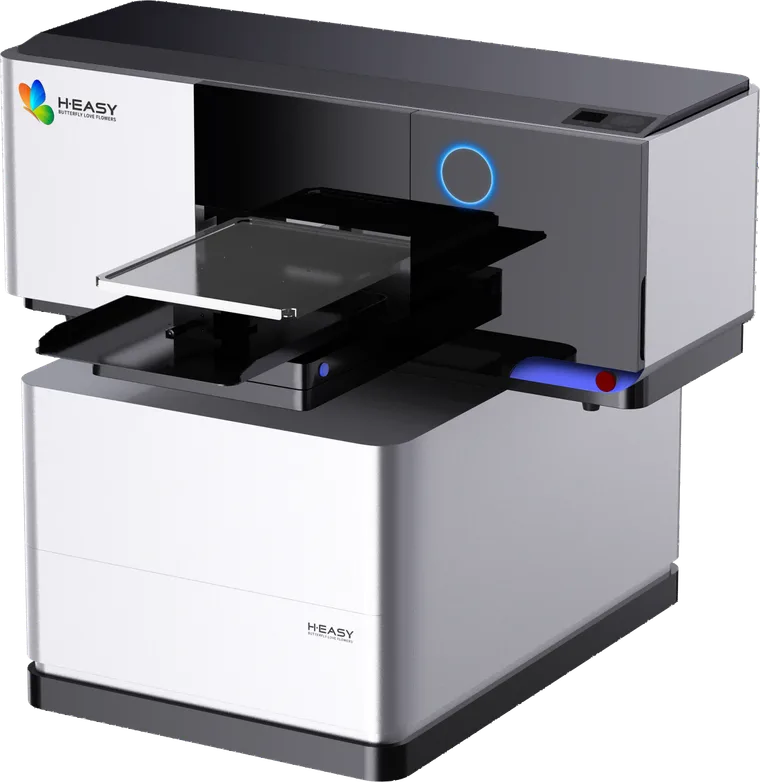
Best for premium cotton orders
Choose DTG for cotton and cotton-rich garments when direct-print hand-feel, one-off personalization and full-front A2 artwork matter.
Review the HY-4050 DTG workflow →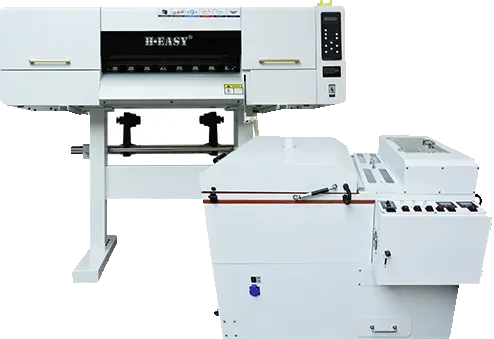
Best for mixed fabrics and batch transfers
Choose DTF for cotton, polyester and blends when transfers can be printed in batches and applied across a wider garment mix.
Review the HY-702 DTF workflow →Need the process comparison first? Read the DTG vs DTF profitability guide.
How the calculator derives cost and payback
The same calculation method is applied to both presets, so every result can be checked and reproduced outside the page.
Unit consumablesGarment + ink + film + powder + pretreatment + other variable cost
Allocated operating cost(Daily labor + daily electricity) ÷ sellable daily prints
Adjusted unit cost(Consumables + allocated operating cost) ÷ effective yield
Monthly net profit(Selling price − unit cost) × monthly output − monthly fixed cost
PaybackInstalled investment ÷ estimated net profit per working day
Use the model, then verify the production line
ROI is credible only when the garment, artwork, pretreatment or transfer workflow and installed equipment are qualified together.

12-month core-machine coverage
Confirm the final covered components, service scope and optional extensions on quotation.
Documented factory and product proof
Review quality-management and applicable conformity documents before final qualification.
View certificate records →Workflow assumptions checked before order
Material, artwork, output target, curing, utilities and operator plan are reviewed against the proposed line.
Frequently asked questions
How does the DTG and DTF ROI calculator estimate monthly profit?
The calculator subtracts garment, ink, pretreatment, film, powder, labor, power, waste and monthly fixed costs from sales revenue. Monthly output equals daily prints multiplied by working days. The result is an estimate, not a guaranteed return.
What should be included in machine investment?
Enter the complete installed investment: printer, powder shaker or curing equipment, heat press, pretreatment equipment, RIP, freight, duties, setup and the initial spare-parts package where applicable.
Why can DTG and DTF have different unit costs?
DTG normally adds garment pretreatment and prints directly on cotton, while DTF adds PET film and adhesive powder but works across more fabric types. Labor, white-ink coverage, waste and daily utilization can change either result.
Is DTF cheaper than DTG per print?
It depends on your order mix, not on the process alone. DTG adds garment pretreatment and prints directly onto cotton, while DTF adds PET film and adhesive powder but applies across cotton, polyester and blends and can be printed in batches. On short cotton-only runs DTG often has fewer consumable steps; on mixed-fabric or batched work DTF can spread labor across more units. Enter your own garment cost, white-ink coverage, waste and sellable daily output above to compare the two unit costs side by side rather than assuming one is always cheaper.
Which inputs have the biggest effect on payback?
Daily sellable volume, average selling price, garment cost, labor allocation and machine utilization usually have the largest effect. Use actual paid orders and sellable output rather than maximum rated printer speed.
Are the default DTG and DTF values guaranteed production costs?
No. The presets reproduce reference assumptions from the current live-site calculator and are provided only as a starting point. Replace every value with supplier quotes, local wages, electricity prices and your tested ink consumption before investing.
Get a machine-specific cost review
Send your garment material, artwork size, paid-order volume and local utility assumptions. We can check workflow fit and prepare a configuration quotation without treating the calculator result as a guarantee.