DTG vs DTF: Which Is More Profitable for Your Factory?
For most contract apparel factories in 2026, DTF is more profitable per-piece on dark fabric and mixed-SKU work. DTG remains the choice for premium cotton with the softest hand. The most profitable shops run both processes, treating them as complementary rather than competing. This post walks the cost structure.
Use the interactive DTG vs DTF ROI calculator to compare unit cost, monthly net profit, break-even volume and equipment payback with your own selling price, labor and consumable assumptions.
What’s the difference between DTG and DTF printing?
DTG jets CMYK + White pigment ink directly onto pretreated fabric and heat-cures it. DTF prints CMYK + White on PET film, dusts hot-melt adhesive powder, cures the powder, then heat-presses the film transfer onto fabric. See the complete DTF guide for the full DTF workflow.
How do DTG and DTF costs compare?
| Factor | DTG | DTF |
|---|---|---|
| Ink cost per piece | Higher (especially with pretreatment) | Lower |
| Labor cost | Moderate (pretreat + load + press) | Lower (decoupled workflow) |
| Equipment cost | Mid-to-high (printer + pretreat machine) | Mid (printer + shaker + press) |
| Production efficiency | Medium (1 piece at a time) | High (batch transfer films) |
| Setup time per design | None | None |
| White underbase | Built-in to print, plus pretreatment | Built-in to print stack |
Where DTG loses
- Per-shirt ink + pretreatment is more expensive than per-shirt DTF consumables
- Pretreatment is a serial bottleneck - every dark-fabric shirt waits
- Labor per piece is higher (pretreat → dry → print → press → cure)
Where DTG wins
- Softest hand on premium cotton (no transfer-adhesive layer)
- Direct fibre print is a brand-story advantage for premium / boutique apparel
- Simple light-cotton work (no pretreat needed) is competitive with DTF
Which prints faster, DTG or DTF?
DTF wins on throughput in most realistic factory setups:
- Transfer films can be batch-printed and stored, decoupling printing from heat-press
- Rush orders are faster on DTF - a stockpile of pre-printed films ready to press
- Mixed-fabric jobs run on the same machine - no per-fabric pretreatment setup
DTG ties the printer to the press in a one-shirt-at-a-time loop.
When DTG is the right choice
- Premium cotton apparel (high-end T-shirts, organic cotton brands)
- Soft-hand-critical applications (boutique fashion, lookbooks)
- Light-cotton work where pretreatment isn’t needed
- Brand story value of “direct-to-garment ink” matters to your customer
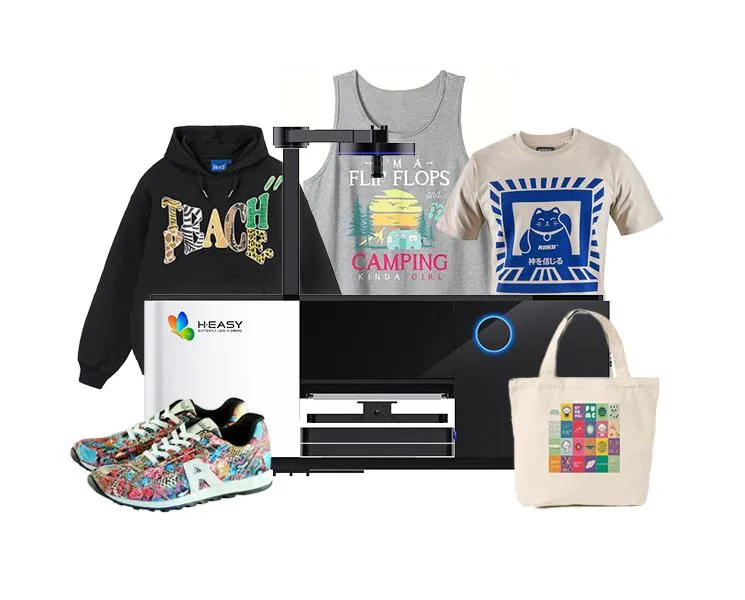
For DTG production, see the HY-4050 DTG printer - A2 platen, two Brother industrial piezo heads and independently controlled CMYK + White channels.
When DTF is the right choice
- Dark-fabric work (the white underbase + powder system is more efficient)
- Mixed-fabric daily output (cotton, polyester, blends, nylon)
- Short-run / custom-per-piece work
- Photo-realistic artwork that DTG color separation handles less cleanly
- Operations where labor cost per piece is the differentiator
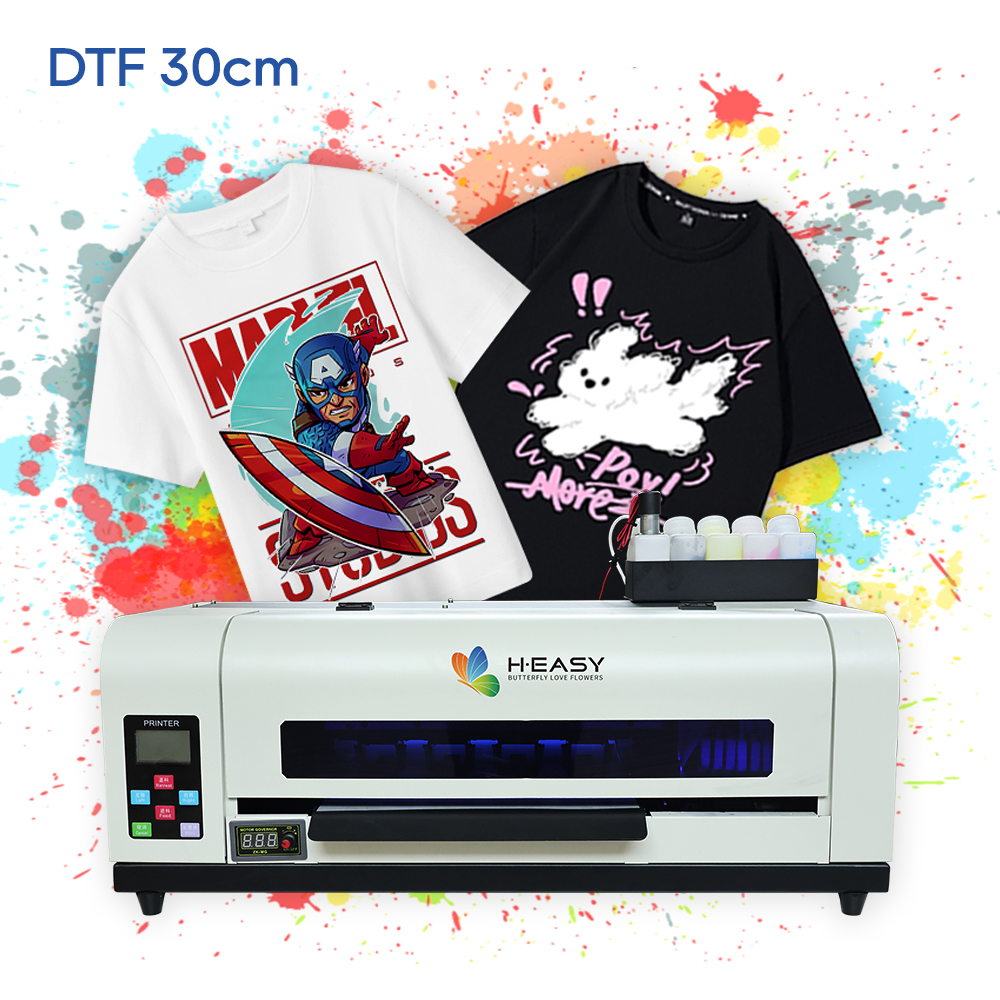
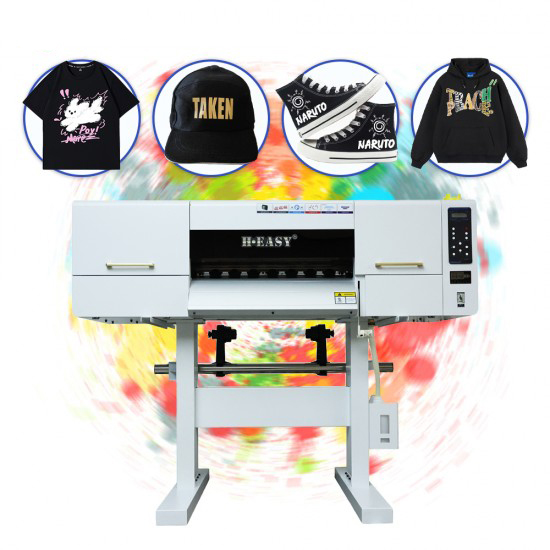
For DTF production, see the HY-702 60cm production DTF printer or the HY-401 30cm desktop DTF.
Running both
The most profitable factory configuration in 2026 typically combines a mid-range DTG (for premium cotton) and a production DTF (for everything else). Order intake routes by fabric and run size:
- Premium cotton, single piece → DTG
- Mixed fabric, any volume → DTF
- Dark synthetic / polyester blend → DTF
- Rush turnaround → DTF (use pre-printed transfer stock)
Total equipment investment for both: ~$20K–$35K. Total daily output: 200+ pieces across both processes. Margin per piece: $5–$15 depending on fabric, artwork and market.
Conclusion
“DTG vs DTF” isn’t an either-or for a serious factory. DTF wins on cost and throughput across most order types; DTG keeps the premium-cotton segment. Plan the floor around both - and route incoming orders to the right machine.
Continue your production plan
Printers matched to this guide