DTF vs Screen Printing: Which Printing Method Makes Sense Today?
DTF and screen printing aren’t direct competitors - they win in different volume zones. DTF wins below ~100–200 garments per design (no setup, instant changes, photo-realistic detail). Screen printing wins above that (amortized setup, lowest per-unit cost at volume, excellent washfastness). Most serious shops run both.
What is DTF printing?
Direct-to-film printing: artwork is printed onto a PET transfer film with CMYK + white ink, dusted with hot-melt adhesive powder, cured, then heat-pressed onto fabric. No screens, no plates, no minimums. See the complete DTF guide for the full process.
What is screen printing?
A stencil-based process: each ink color requires a separate screen with the design burned in. Ink is squeegeed through each screen onto the garment. Setup cost is significant per design (multiple screens, registration), but unit cost drops sharply on long runs of the same design.
What are the main differences between DTF and screen printing?
| DTF | Screen printing | |
|---|---|---|
| Setup per design | None | High (screens, registration) |
| Minimum order | 1 piece | Typically 24+ pieces to be economical |
| Color count | Photo-quality CMYK + W | Limited per pass; spot color heavy |
| Best for | Custom, short-run, mixed SKU | High-volume, single design |
| Fabric range | Cotton, polyester, blends, nylon, canvas, denim | Wide; same |
| Unit cost (low volume) | Low | High |
| Unit cost (high volume) | Medium | Low |
| Wash durability | 40–50 cycles | 50+ cycles |
| Photo-realistic artwork | Excellent | Difficult |
When should you choose DTF over screen printing?
- Mixed-SKU work (every garment can be different)
- Sample runs, prototypes, custom one-offs
- Photo-realistic or gradient-heavy artwork
- Quick turnaround / instant design changes
- Lower startup investment ($5K–$15K vs $20K+ for a screen line)
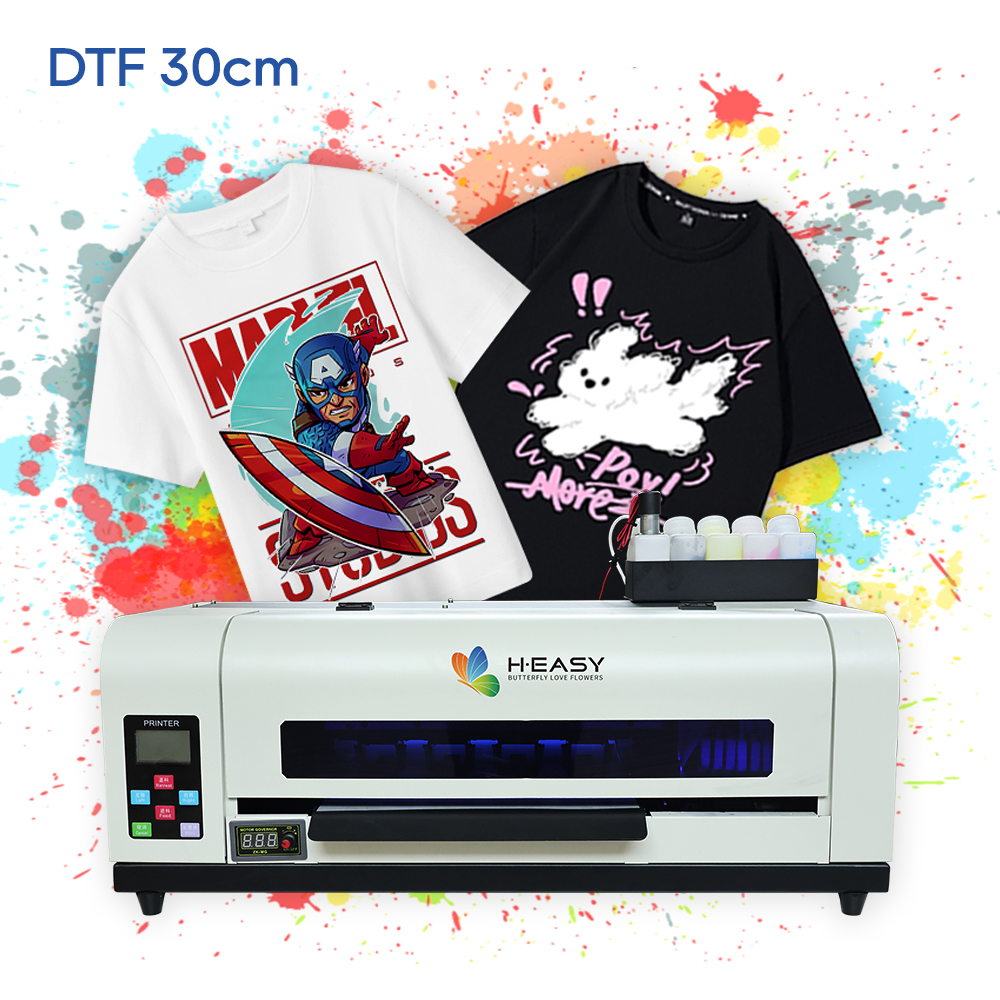
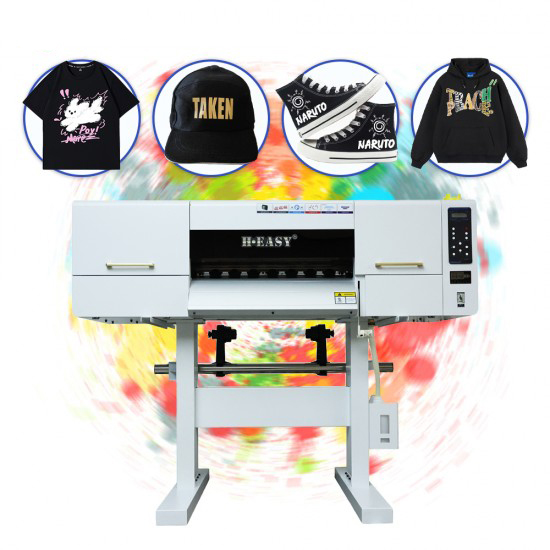
See the HY-401 30cm DTF for desktop / sampling and the HY-702 60cm production DTF for daily volume.
When is screen printing the better choice?
- Bulk orders of the same design (50+ pieces of the same artwork)
- Athletic apparel and uniforms with simple multi-color logos
- Promotional merchandise at large volume
- Brand-owned wholesale production runs
How to run both
Many shops use DTF for first articles, samples and short-run customs and screen printing for production reorders of the same design. The DTF sample becomes the screen-printing proof; the screen press takes over once volume justifies the setup.
For DTF startup costs and equipment selection, see how much does it cost to start a DTF printing business.
Printers matched to this guide