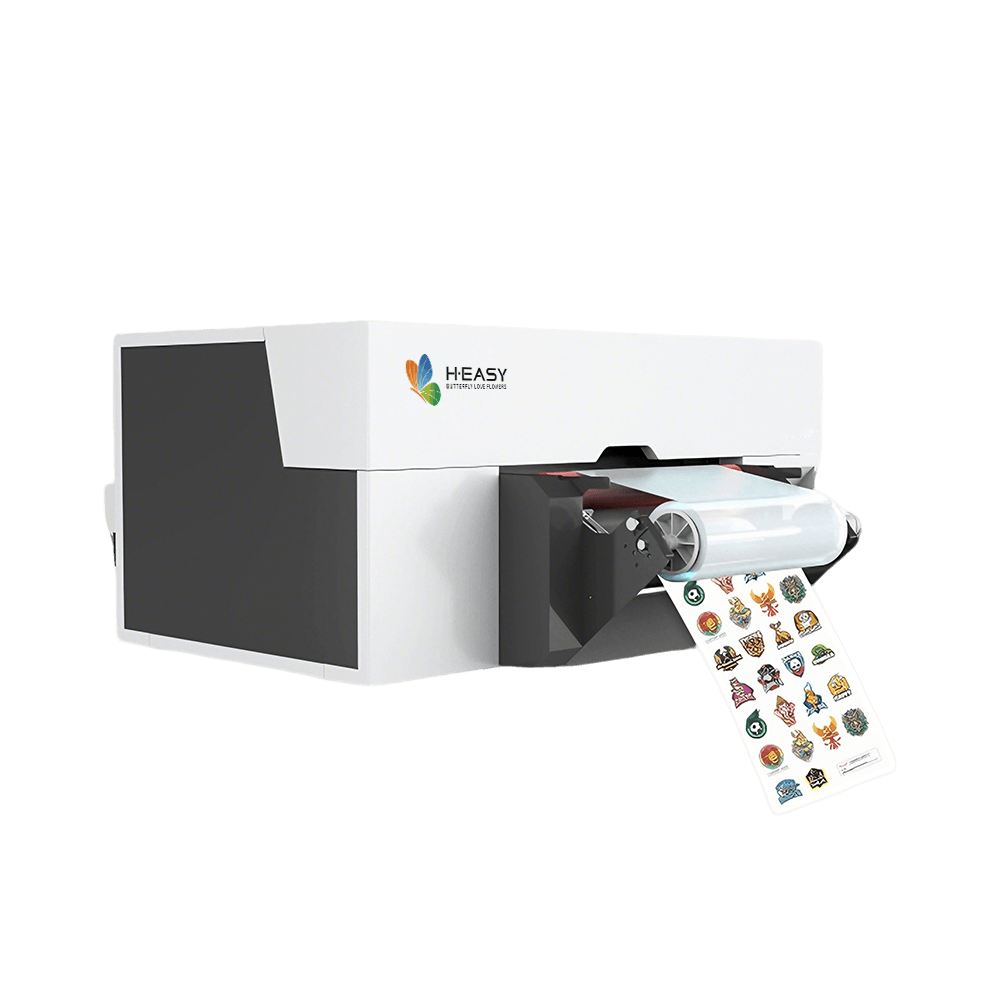
The Complete DTF Printing Guide: Process, Fabrics, and UV-DTF Comparison
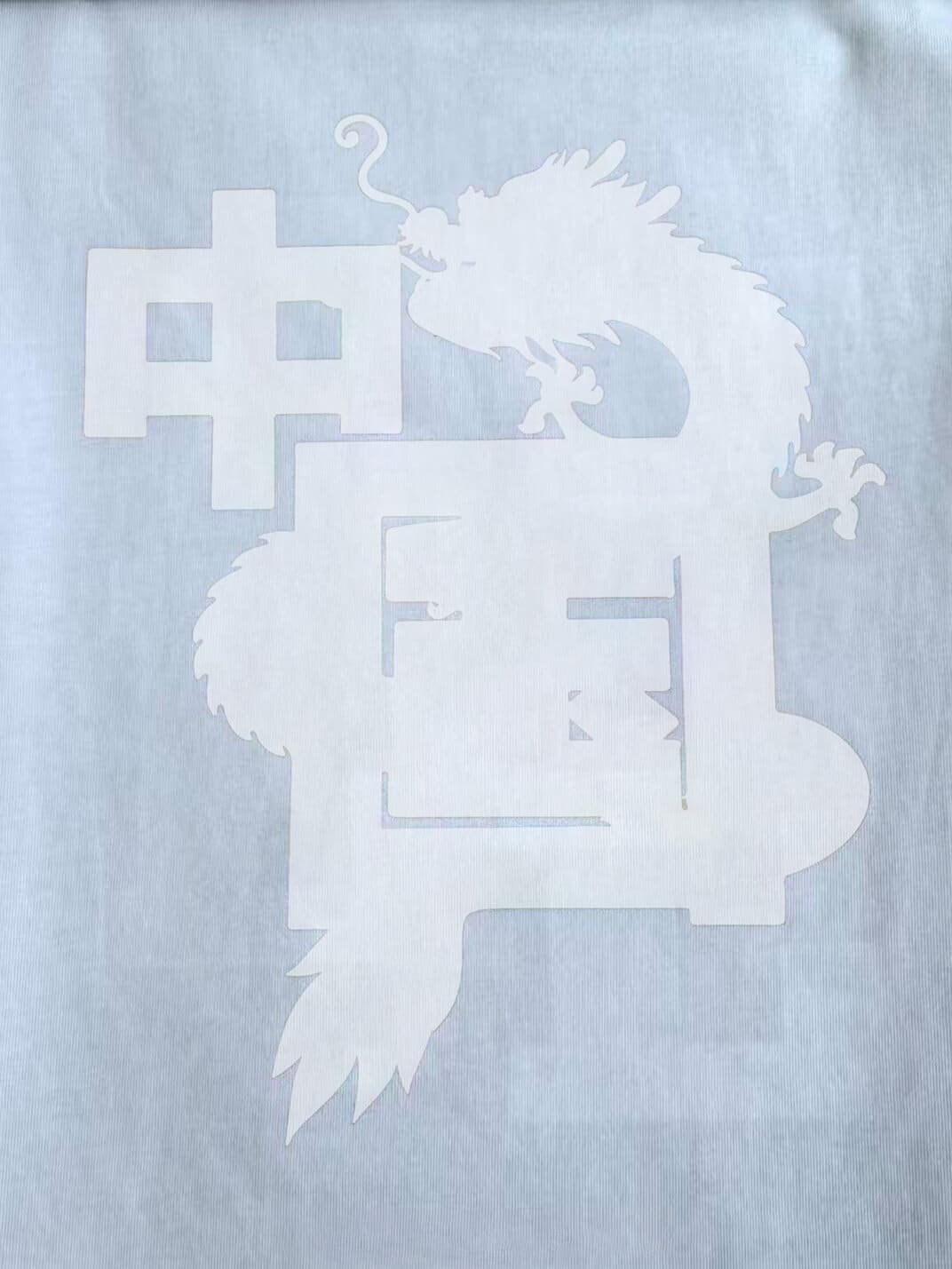
DTF (direct-to-film) printing prints CMYK + white artwork onto a PET transfer film, applies hot-melt adhesive powder, cures the powder, then heat-presses the transfer onto fabric. It works on cotton, polyester, blends, nylon, canvas and denim, usually without fabric pretreatment. UV-DTF replaces heat-press with UV-cure and a cold A/B film system, extending the workflow to glass, metal, plastic, wood and other hard substrates.
This pillar covers the full DTF workflow: process, consumables, fabric compatibility, heat-press settings, durability, and when to choose UV-DTF instead.
The DTF process
DTF transfer printing is a four-step workflow:
- Print the artwork on PET transfer film as CMYK + white. White is printed last (underbase), to be placed against the fabric after transfer.
- Powder - apply hot-melt adhesive powder evenly across the still-wet ink. Excess powder is shaken off.
- Cure the powder by heating the film until the powder melts into a uniform adhesive layer (typically inline in production machines).
- Press - heat-press the film onto the fabric at the correct temperature, time and pressure. Peel hot or cold per the film TDS.
Consumables
- CMYK + White DTF ink - water-based pigment; high-opacity white is the most critical channel for dark fabrics. Confirm that the ink set is approved for the chosen printhead and DTF printer configuration.
- PET transfer film - cold-peel or hot-peel grade.
- Hot-melt adhesive powder - typically polyurethane-based; fine for high-detail, medium / coarse for heavyweight stock.
- Cleaning / maintenance solution for printheads and capping station.
Best fabrics for DTF
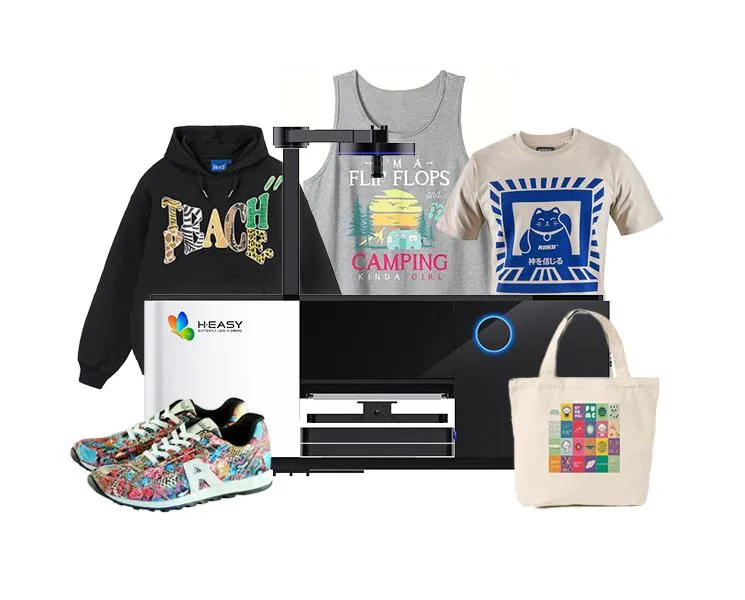
DTF works on most natural and synthetic fabrics, but each substrate behaves differently under heat and pressure. The three most common DTF fabrics:
100% Cotton
The most forgiving and widely used DTF fabric. High color vibrancy, excellent adhesion. Medium-to-heavyweight cotton (180–240 GSM) is the production default - light cotton can scorch at high temperatures, heavier cotton may need longer dwell time.
100% Polyester
Ideal for sportswear and performance garments. Crisp image edges and high durability. Press at lower temperature to avoid scorching - polyester yellows around 150 °C.
Nylon
Heat-sensitive and smooth - challenging but possible. Requires low-temperature adhesive powder and mandatory test transfers. Don’t queue production runs on nylon without sample-pressing first.
Other fabrics
- Cotton / poly blends - straightforward; trend toward polyester settings.
- Canvas / denim - firm pressure and full dwell time for heavyweight fabric penetration.
- Leather / faux leather - low temperature, light pressure; test first.
Heat-press settings reference
| Fabric type | Temperature | Time | Pressure |
|---|---|---|---|
| 100% Cotton | 150–160 °C (300–320 °F) | 12–15 s | Medium-firm |
| Cotton / poly blends | 140–150 °C (280–300 °F) | 10–12 s | Medium |
| 100% Polyester | 132–143 °C (270–290 °F) | 8–10 s | Light-medium |
| Nylon | 121–132 °C (250–270 °F) | 8–10 s | Light |
| Denim / canvas | 150–160 °C (300–320 °F) | 12–15 s | Firm |
| Leather / faux | 121–135 °C (250–275 °F) | 8–10 s | Light |
These are starting points - confirm with film and powder TDS, and run a test transfer + wash cycle before committing a production run.
Durability and washfastness
A properly produced DTF print withstands 40–50 wash cycles with minimal visible fading. Sub-10-cycle fade usually traces to one of: under-cured prints, weak white underbase, low ink density, or wrong customer wash care. See How to prevent DTF print fading for the full diagnostic chain.
DTF vs UV-DTF
DTF and UV-DTF share the “print on film, transfer to substrate” model but diverge sharply on chemistry, substrate range and finish.
| DTF | UV-DTF | |
|---|---|---|
| Ink chemistry | Water-based pigment | UV-curable |
| Cure | Heat-cured adhesive powder | UV cure (LED) |
| Transfer | Heat-press onto fabric | Cold transfer with A/B film |
| Substrates | Cotton, polyester, blends, nylon, canvas, denim | Glass, metal, plastic, wood, ceramic, acrylic |
| Finish | Soft hand, slight texture | Embossed, 3D texture, high abrasion resistance |
| Durability | 40–50 wash cycles | Outdoor-suitable, high scratch resistance |
| Equipment | Printer + powder shaker + dryer + heat press | UV-DTF printer + (optional) laminator |
| Initial cost | Lower | Higher |
| Per-unit cost | Higher labor steps | Streamlined, less labor |
| Best for | Apparel and textile | Labels, decals, gifts, packaging, signage |
When to choose DTF
- The substrate is fabric (apparel, textile, soft goods).
- A soft hand and slight texture are preferred over an embossed finish.
- Initial equipment budget is the constraint.
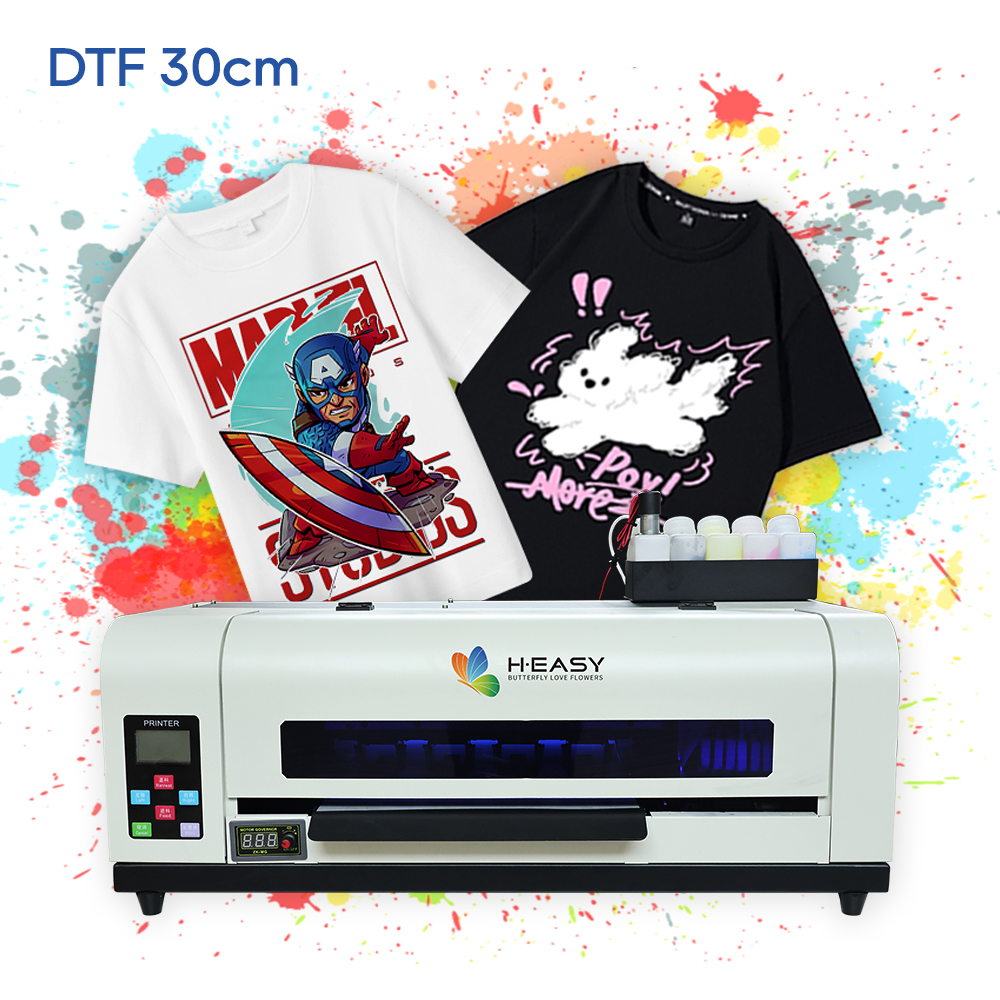
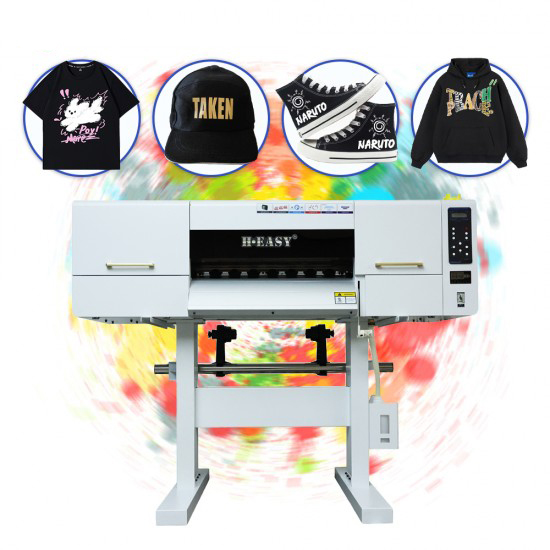
→ See the HY-401 30cm DTF or HY-702 60cm DTF.
When to choose UV-DTF
- The substrate is hard (glass, metal, plastic, wood, ceramic).
- The product needs outdoor durability or high abrasion resistance.
- An embossed / 3D textured finish is part of the brand look.
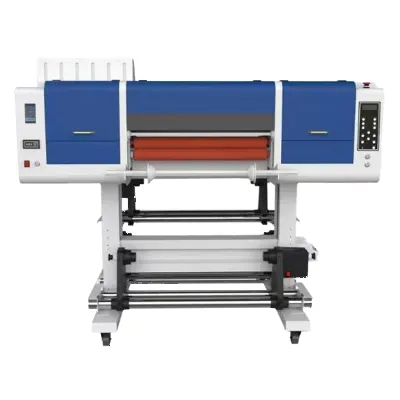
→ See the HY-401 30UV UV-DTF or HY-702 UV 65cm UV-DTF.
DTF vs other garment-printing methods (brief)
- DTF vs DTG: DTG prints directly onto pretreated garment fibre; DTF prints onto film and transfers. DTG handles cotton with extreme softness; DTF handles broader fabric range without pretreatment. See DTG vs DTF profitability.
- DTF vs sublimation: sublimation only works on polyester (or coated rigid substrates) and gives the softest hand on polyester. DTF works on cotton too.
- DTF vs screen printing: screen printing has lower per-unit cost at high volume but high setup cost per design. DTF is plate-free with no minimums - better for mixed-SKU, lower-volume work.
Choosing a DTF printer
Match printer class to daily volume:
| Class | Use case | Example |
|---|---|---|
| 30 cm desktop | Sampling, A3 jobs, short runs | HY-401 |
| 60 cm production | Daily volume, full-bleed adult garments | HY-702 |
| 1.8–2.6 m R2R | Direct-to-fabric textile (different process - no transfer) | H-Series R2R |
See 60cm DTF printer buying guide for production-class selection and How much does it cost to start a DTF printing business for budgeting.
Conclusion
DTF is the broadest-applicability garment-transfer process available right now - it handles cotton, polyester, blends and nylon, doesn’t require fabric pretreatment, and runs at production speeds on dual-head 60 cm machines. UV-DTF extends the model to hard substrates with a cold A/B transfer. Process discipline (curing, white-ink integrity, correct heat-press settings, customer wash care) is what separates 40-wash prints from 10-wash failures.
Start with the HY-401 30cm DTF for sampling or the HY-702 60cm production DTF for daily volume. For UV-DTF, see the HY-401 30UV or HY-702 UV 65cm. For DTG and direct-to-fabric R2R alternatives, see the HY-4050 DTG and H-Series R2R.
Printers matched to this guide