The Ultimate Guide to DTF Film: How to Achieve Smooth, Durable, Vibrant Prints
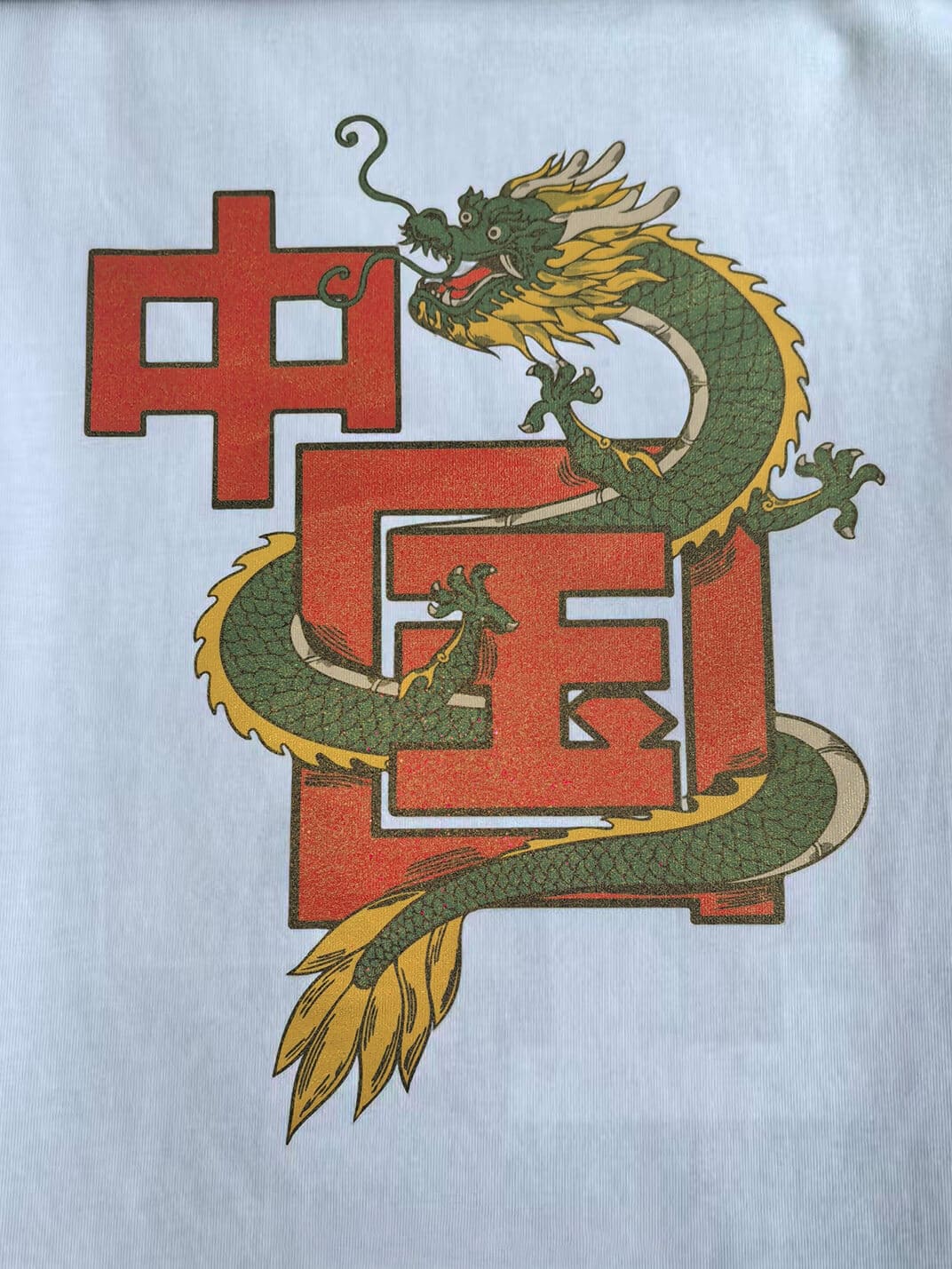
DTF film is the foundation of the DTF transfer process - it’s the substrate ink lands on, the carrier the powder bonds through, and the surface that peels away after heat-press. 75 μm universal-peel film is the production sweet spot, with storage at <30 °C and 40–60% RH. This guide covers what makes good film, what fails on bad film, and how to specify it.
What is DTF film?
DTF film is a PET (polyethylene terephthalate) sheet with a special coating that receives water-based pigment ink and releases cleanly during heat-press transfer. The coating determines:
- Ink receptivity (no bleed, no bead)
- Peel behavior (hot, warm or cold)
- Adhesive-powder bonding consistency
- Final print finish (matte or gloss)
Film structure
Production-grade DTF film is more than “PET + coating”:
- PET base layer - dimensional stability and feed reliability
- Release / separation layer - controls peel force
- Ink receptive coating - accepts water-based ink without bleeding
- Anti-static layer - prevents dust attraction and printhead arcing
- Smoothness control - keeps ink dot placement accurate
Cheap single-coat films skip several of these layers, leading to the classic failures of inconsistent peeling, ink bleed, film shift and poor registration.
Film thickness
| Thickness | Use case |
|---|---|
| 70 μm | Desktop printers, light-duty work |
| 75 μm | Production default - best balance of feed reliability and ink receptivity |
| 80 μm | Heavier print stacks, special effects |
| 100 μm | Thick / specialty applications, rigid feel |
Peel types
| Peel type | Press temperature | Press time | Notes |
|---|---|---|---|
| Cold peel | 150–160 °C | 5–6 s + cool | Strongest bond, matte finish, slowest workflow |
| Warm peel | 150–160 °C | 5–6 s + brief wait | Balanced bond and throughput |
| Hot peel | 150–160 °C | 5–6 s | Fastest, but timing-sensitive |
| Universal | 150–160 °C | 6 s | Forgiving - works as cold, warm or hot |
Universal-peel film is the most production-friendly for mixed-skill teams - operator variation has less impact on final output.
Compatibility
Production-grade DTF film is compatible with all common DTF printheads, including XP600, Epson i3200-A1 and i3200-U1. See:
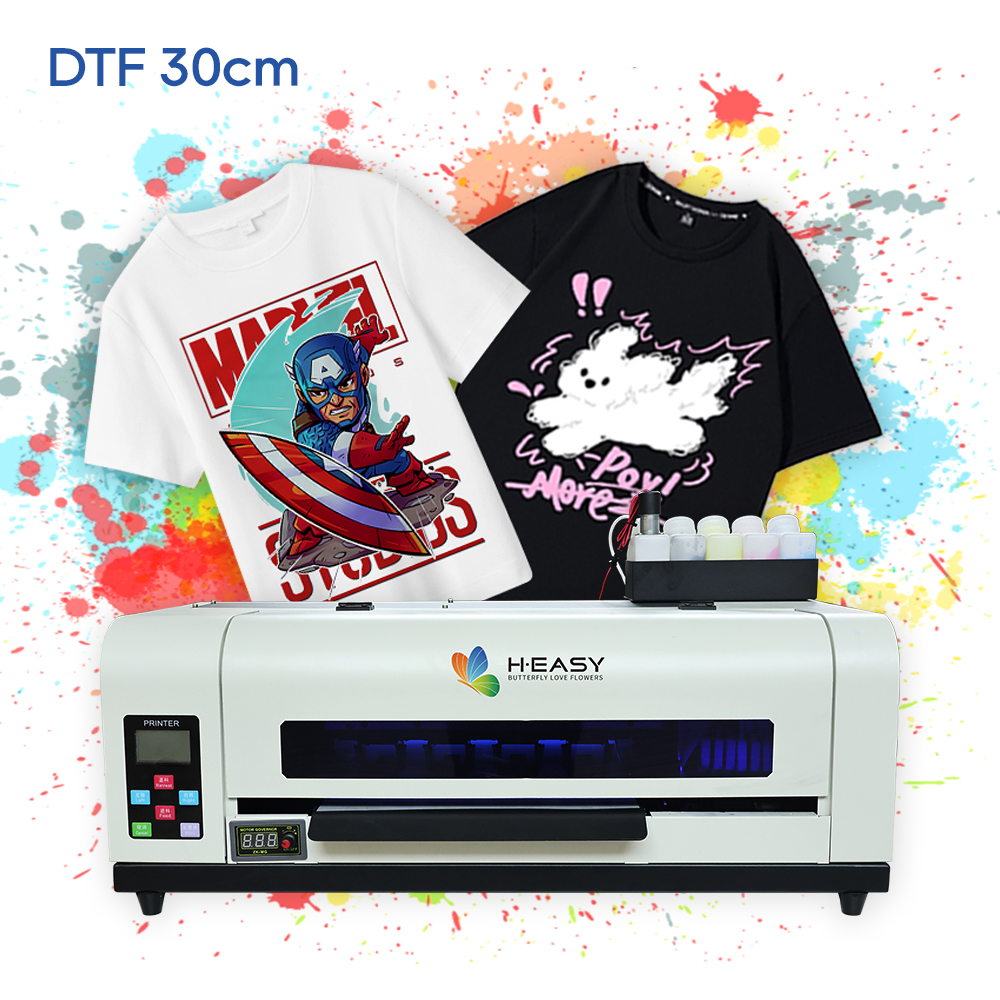
- HY-401 30cm DTF (XP600) - desktop sampling
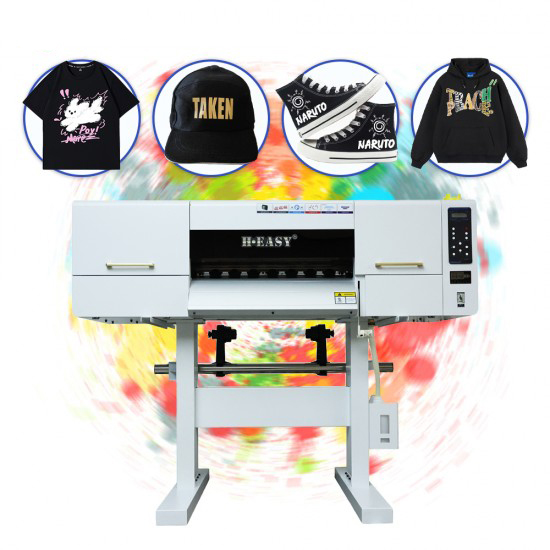
- HY-702 60cm DTF (dual i3200-A1) - production
Storage and shelf life
- Temperature: below 30 °C
- Humidity: 40–60% RH
- Light: away from direct sunlight
- Orientation: stored flat or rolled per supplier spec
- Original packaging: keep sealed until use
Out-of-spec storage causes coating delamination, inter-sheet sticking, and unpredictable powder-adhesion behavior - the kind of failures that appear mid-run with no obvious cause.
Common defects and their root causes
| Defect | Likely cause |
|---|---|
| Inconsistent peeling | Mixed peel types in stock, or coating defects |
| Ink bleeding | Low-grade single-coat film, or out-of-spec humidity |
| Film shifting on platen | Static buildup, anti-static layer failure |
| Poor registration | Film dimensional instability under heat |
| Patchy powder adhesion | Coating inconsistency, or moisture in storage |
Conclusion
DTF film looks like a commodity but performs like a precision substrate. Spec 75 μm universal-peel film from a supplier with multi-layer coating process control. Store it properly. Match the peel type to your operator skill level - universal for mixed teams, cold peel for trained QC-driven production.
For machines optimized for DTF film handling and white-ink reliability, see the HY-401 and HY-702.
Printers matched to this guide