Choosing a DTF Printer: HY-702 / HY-704 Example Guide
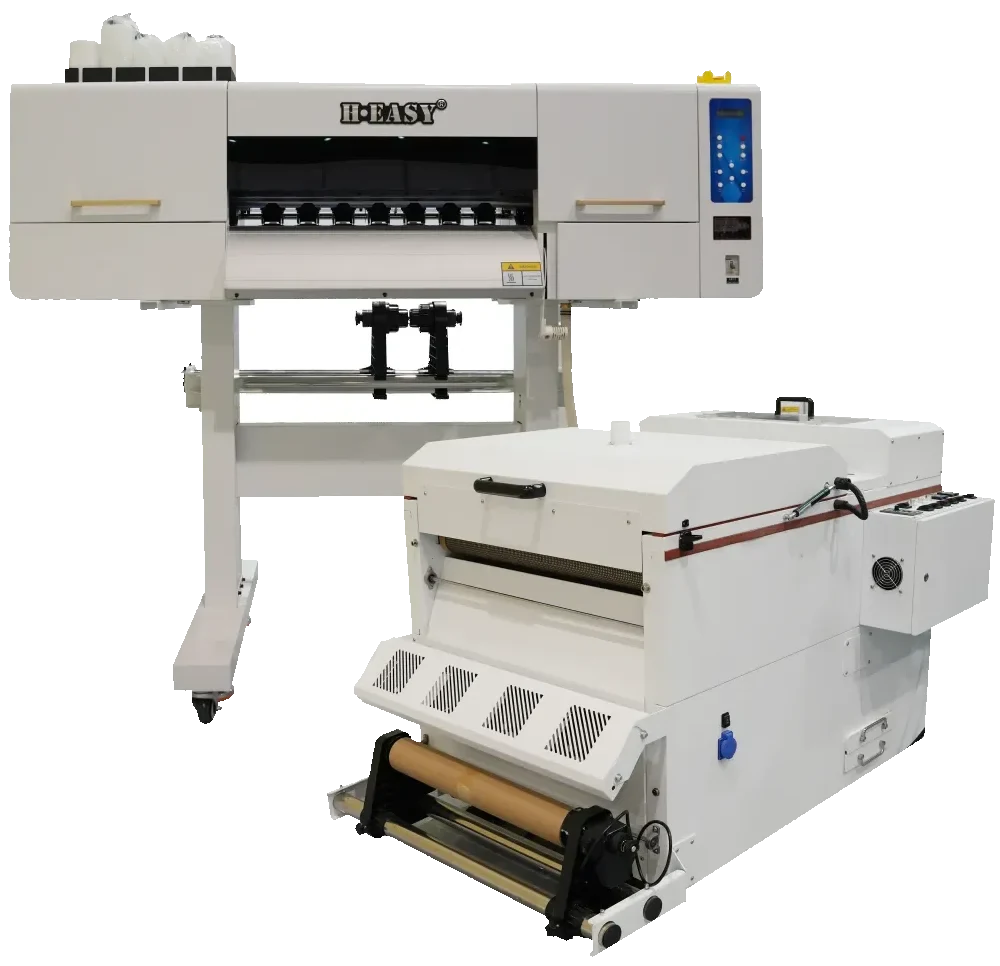
Choosing a DTF printer comes down to matching width and printhead class to honest daily volume. The documented HY-702 is this guide’s production-class reference. The HY-704 remains in the legacy page title, but its width, head configuration and feature differences require a current signed specification. For the broader buying framework, see the more comprehensive 60cm DTF buying guide.
Step 1 - Understand business size and production needs
Startup studios
- 0–50 transfers/day: A3 / 30 cm desktop is plenty
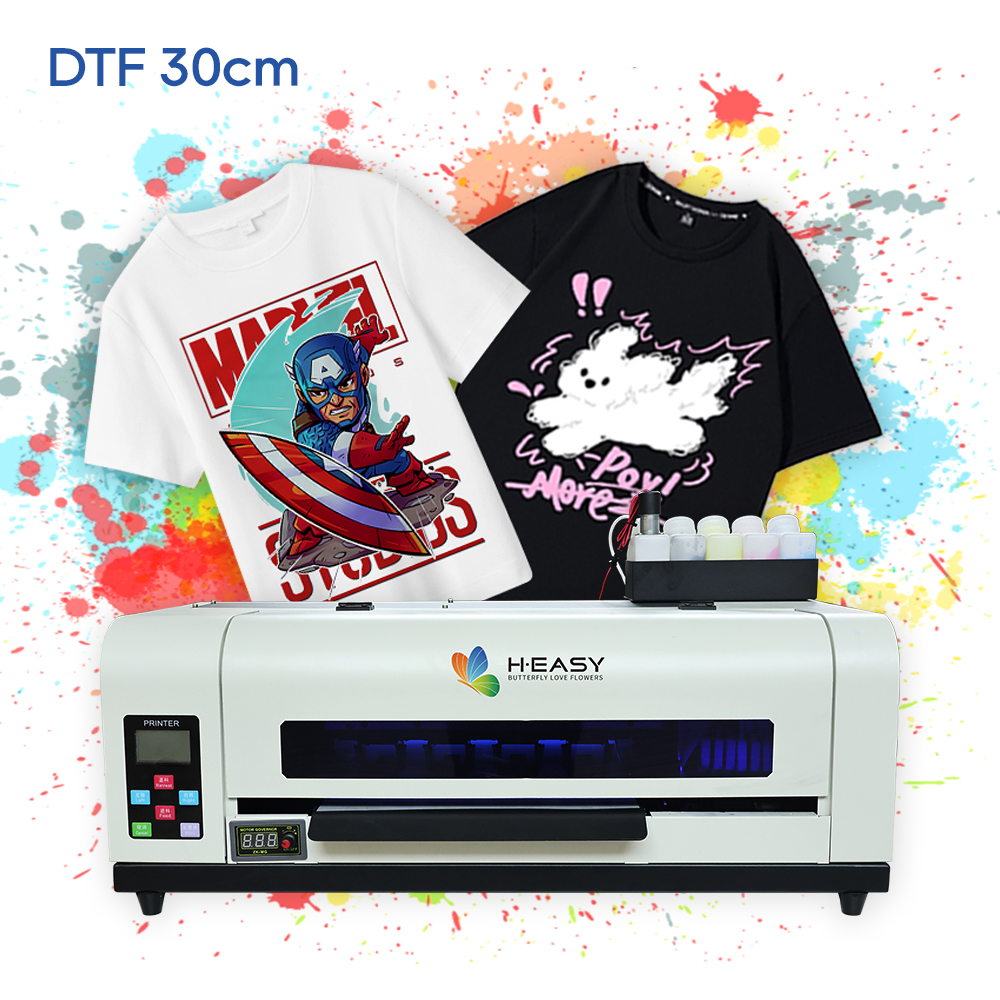
- See the HY-401 30cm DTF
Medium factories
- 50–200 transfers/day: 60 cm production class, dual industrial heads
- See the HY-702 60cm DTF
Large factories
- 200+ transfers/day: 60–90 cm production, multi-head, automation
Step 2 - Print width by application
| Width | Application |
|---|---|
| A3 / 12 inch (30 cm) | Sampling, A3 garment prints, short runs |
| 24 inch (60 cm) | Industrial batch production - adult-garment graphics |
| 1.0–1.2 m | Wide-format DTF, larger graphics, gang printing |
60 cm width is the production sweet spot for adult-garment DTF - wide enough for full-bleed graphics and ganged multi-up layouts, narrow enough to fit a standard workshop footprint.
Step 3 - Printhead technology
Three production tiers, lowest to highest:
| Head | Tier | Use |
|---|---|---|
| Epson XP600 | Entry-level | Desktop sampling (HY-401) |
| Epson i1600 | Mid-range | Step-up from XP600 |
| Epson i3200-A1 | Industrial | Production (documented HY-702 uses dual i3200-A1) |
The documented HY-702 uses dual i3200-A1 heads. A comparable HY-704 configuration must be confirmed on its own signed specification before the two models are compared.
Step 4 - White-ink system
White ink is the highest-risk component in a DTF setup:
- Static white ink sediments - pigment settles to the bottom of the line
- Sedimented white loses opacity - dark fabric prints come out dull
- Sediment clogs the head - premature printhead failure
The HY-702 uses a large-capacity bulk ink supply with a white-ink circulation system (HyCIRC™) that keeps white moving even during idle periods. This is structurally more reliable than entry-level machines with static bottles.
Step 5 - Production speed
| Mode | HY-702 |
|---|---|
| 4-pass | 22 m²/h |
| 6-pass | 15 m²/h |
Real-world throughput depends on artwork complexity, white-ink coverage and whether the shaker keeps pace. The HY-702’s integrated inline shaker keeps printer and shaker synchronized - a major bottleneck removed.
Step 6 - Automation features
Production DTF setups should include:
- Powder shaker - inline integrated (HY-702) > standalone (manual handoff)
- Drying / curing - inline integrated > separate oven
- Auto take-up - for long roll-to-roll DTF runs
- Feeding sensors - automatic film tension and edge alignment
Each automated component removes operator labor cost per piece and reduces the variability that creates QC failures.
Step 7 - After-sales support
- RIP software - choose a printer with established RIP support (Maintop, PhotoPRINT, etc.)
- Maintenance - daily / weekly / monthly checklist, see DTF printer maintenance checklist
- Spare parts availability - common stocked parts may dispatch within 48 hours once stock, destination and order details are confirmed; machine delivery windows such as 7–15 days must be confirmed per configuration
See also
Printers matched to this guide