Pigment vs Reactive Printing: Which Is the Future?
Pigment ink printing is becoming the most scalable digital textile solution thanks to lower water, energy and labor costs than reactive
- and tightening environmental regulation accelerates the shift. But reactive still wins on premium cotton softness and color depth. Both will coexist; the market share is moving.
What’s the difference between pigment and reactive printing?
| Pigment | Reactive | |
|---|---|---|
| Bond mechanism | Binder system on fabric surface | Covalent bond with cellulose (cotton) |
| Wash step | Not required | Required to remove unfixed dye |
| Fabric range | Cotton, polyester, blends, nylon, silk, wool | Cotton-class fibres primarily |
| Color saturation | Good with modern chemistry | Excellent on cotton |
| Hand feel | Slight stiffness (binder film) | Softer (no surface layer) |
| Process steps | 4 (size, print, dry, fix) | 7 (size, print, steam, wash, dry, fix, finish) |
| Wastewater | Minimal | Significant (wash effluent) |
Is pigment or reactive printing more efficient?
Pigment’s workflow is structurally shorter than reactive:
- No steaming chamber
- No multi-stage washing line
- No final drying after wash
- No finish treatment after wash
Each step removed = less floor space, less equipment cost, less labor, less defect-introduction risk. See pigment textile printing process for the step-by-step pigment workflow.
Is pigment or reactive printing cheaper?
Pigment ink is typically more expensive per kg than reactive - but the total cost-per-m² favors pigment in most modern factory setups:
| Reactive | Pigment | |
|---|---|---|
| Ink cost | Lower | Higher |
| Water + treatment | Significant | Minimal |
| Energy | High (steam + wash heat) | Moderate (heat-fix only) |
| Labor | High (multi-stage line) | Lower (fewer steps) |
| Equipment depreciation | High | Lower |
Net per-m² typically lands around $0.58/m² for pigment in industrial production. Reactive’s total cost varies more by mill, with wash and steam infrastructure as the swing factors.
On the hardware side, machines qualified for pigment printing on the H-Series roll-to-roll platform ship after the same ISO 9001 process and 72-hour burn-in used across the range (more on our factory), so the ink-to-machine pairing behind these numbers is tested at the unit level before it reaches a production floor.
Which is more sustainable: pigment or reactive?
Pigment is structurally cleaner:
- Wastewater: minimal (just pretreatment runoff vs reactive’s wash effluent)
- Water consumption: orders of magnitude lower
- Carbon footprint: lower (no steaming, less drying)
- Compliance burden: lower (less effluent monitoring and treatment)
For mills operating under tightening environmental regulation, pigment isn’t just a cost optimization - it can be a permission-to-operate factor.
Application scenarios
| Application | Recommended ink |
|---|---|
| Premium cotton apparel | Reactive |
| Premium silk / wool fashion | Acid (not reactive or pigment) |
| Polyester sportswear, bulk | Disperse (sublimation) |
| Cotton-polyester blends | Pigment |
| Home textile (curtains, bedding) | Pigment or disperse |
| Soft signage | Pigment or disperse |
| Knitted blends, stretch fabric | Pigment |
| Fast-fashion mixed-SKU | Pigment |
For matching fabric to ink choice, see how to choose the right fabric printing process.
Limitations and improvements
Modern pigment chemistry has closed most of the historical gap to reactive on:
- Color depth - finer pigment dispersion delivers competitive saturation
- Hand feel - better binder systems reduce stiffness
- Fastness - modern binders meet commercial wash-test grades
What hasn’t fully closed:
- Premium softness on pure cotton - reactive still has the edge
- Deepest blacks and reds - reactive’s covalent fibre bond still produces the most saturated darks
Equipment
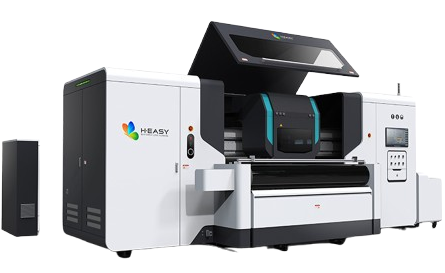
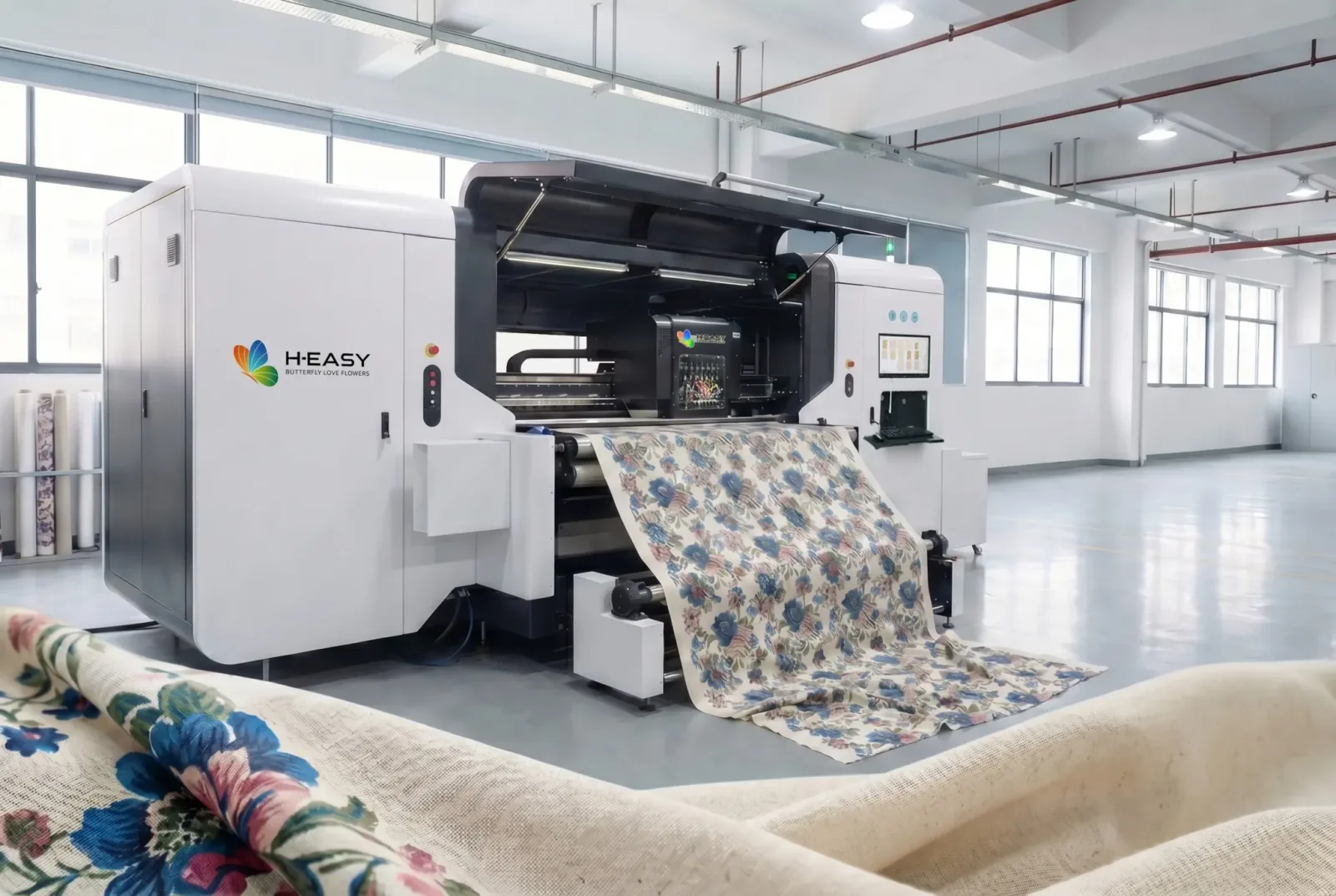
For pigment textile printing (and reactive, and disperse, and acid) at industrial scale, see the H-Series R2R printers - 1.8–2.6 m Ricoh Gen6 platforms with all four ink workflows on the same machine class. A factory can hedge the pigment-vs-reactive transition by buying machines that run both.
Conclusion
Pigment ink is the most scalable and future-oriented digital textile solution for most categories. Reactive will hold the premium-cotton segment for the foreseeable future. The smart factory bet is dual-ink capability - machines that run both, with ink selection driven by job specifications rather than locked by hardware.