Why DTF Printing Performs Exceptionally on Dark Fabrics
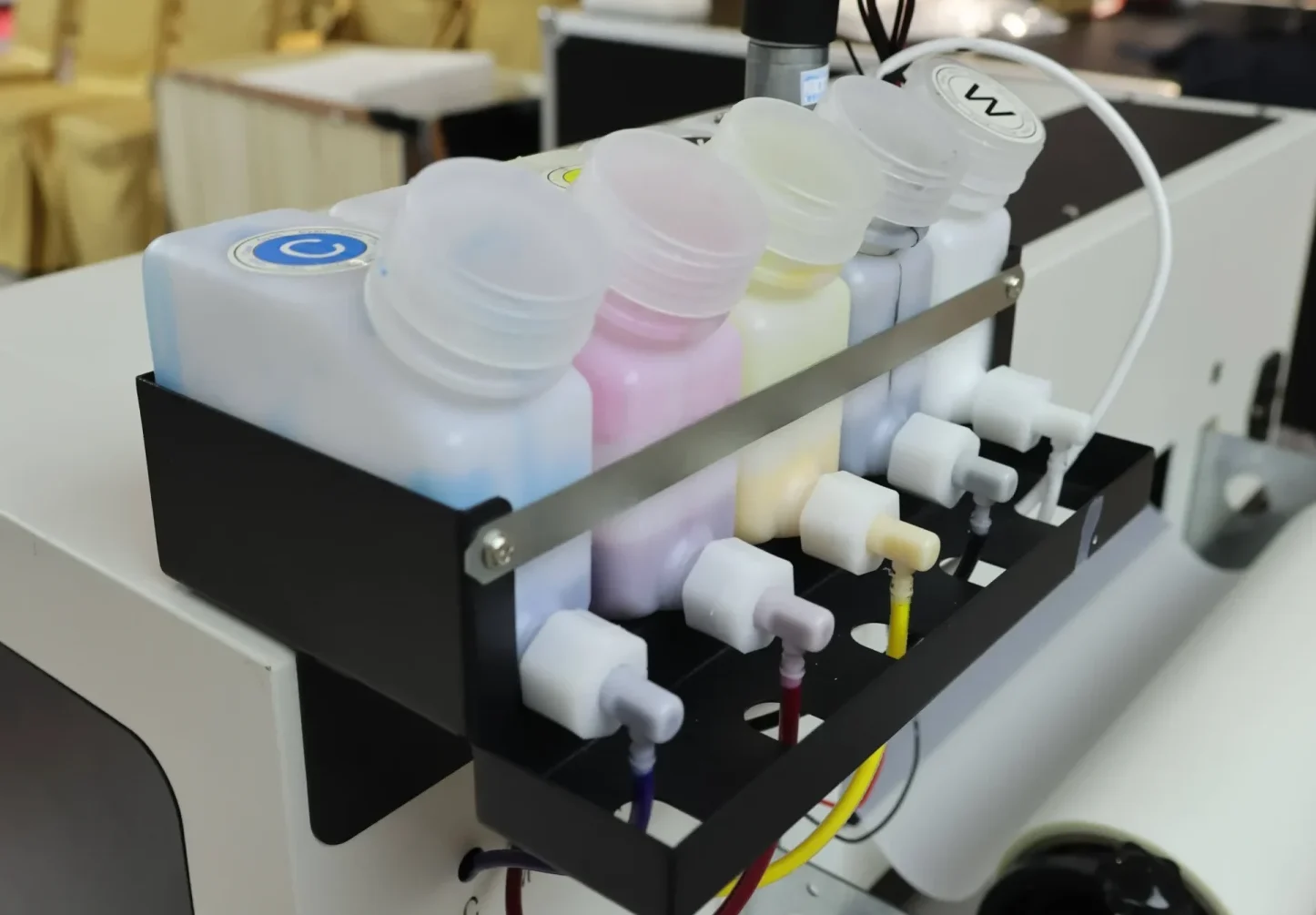
DTF prints look vivid on dark fabric because the process prints a dedicated high-opacity white underbase under the color layer. The white ink layer acts as an opaque canvas - CMYK on top reads bright and saturated against black, navy or any dark substrate. Unlike DTG, DTF needs no fabric pretreatment to achieve this.
The white underbase is the secret
On dark fabric, color ink alone disappears into the substrate - black eats red, navy eats yellow. DTF solves this with a layered print stack:
- CMYK color prints first onto the PET film
- White underbase prints on top of the color (against the eventual fabric side)
- Hot-melt adhesive powder dusts onto the still-wet white
- Cure melts the powder into a uniform adhesive layer
- Heat-press transfers the whole stack onto fabric - now color sits on top of white sits on top of fabric
The buyer sees CMYK against an opaque white background, not CMYK fighting against navy.
Why does DTF beat DTG on dark fabric?
DTG (direct-to-garment) prints water-based ink directly onto the fibre. For dark fabric DTG needs:
- Fabric pretreatment - a liquid coating applied, dried and cured before printing
- Heavier white-ink coverage (multiple passes, often with cure in between)
- Pretreatment chemistry management - shelf life, storage, application consistency
DTF skips all of this. The white-ink bond is on the film, not the fabric; the heat-melt powder bonds the stack to fabric in a single press step. For contract printers and short-run shops, that simplification is the difference between profitable dark-fabric work and unprofitable dark-fabric work.
How do you prepare artwork for dark-fabric DTF?
- Vector art preferred - clean edges hold up better in DTF than in DTG
- Bold colors - DTF on white underbase delivers high saturation
- Avoid extreme thin lines - keep stroke weight at or above ~1 pt to ensure clean underbase
- Test the underbase passes - 2–4 passes is typical; verify on representative artwork before production
What settings improve DTF on dark fabric?
- High-opacity white ink - the single biggest variable; cheap white inks need more passes for the same opacity, eating ink budget
- White-ink circulation - sedimented white loses opacity. The HyCIRC™ system on the HY-702 keeps circulation running through idle periods
- Match powder grade to fabric - fine powder for detail; medium / coarse for heavyweight stock
- Press inside out - protects color side from direct press contact and reduces gloss differences
Applications where DTF dark-fabric work shines
- Custom black T-shirts and hoodies - sample-friendly, no pretreat
- Sports jerseys (synthetic, dark base)
- Workwear with logo and identification (often dark/navy)
- Tote bags, drawstring bags, accessories in dark colors
- Children’s apparel with bright bold prints on dark backgrounds
Production efficiency on dark fabric
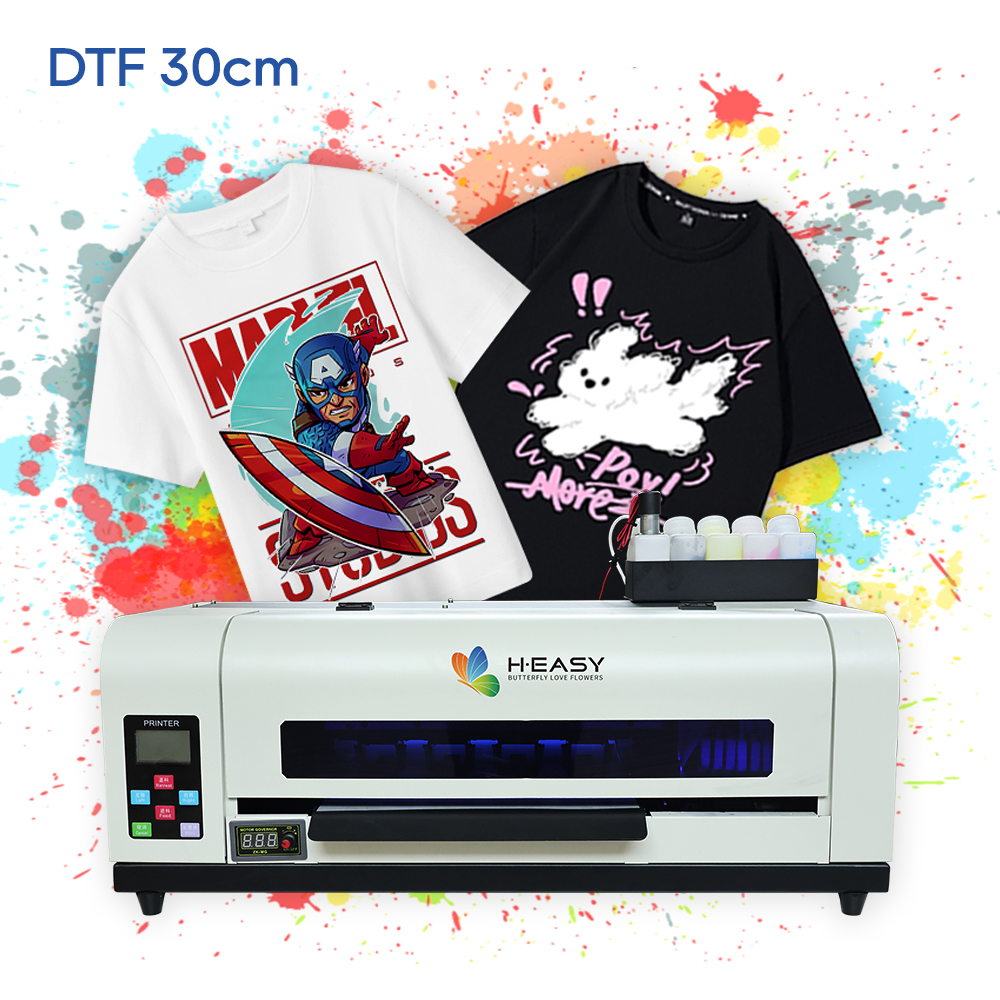
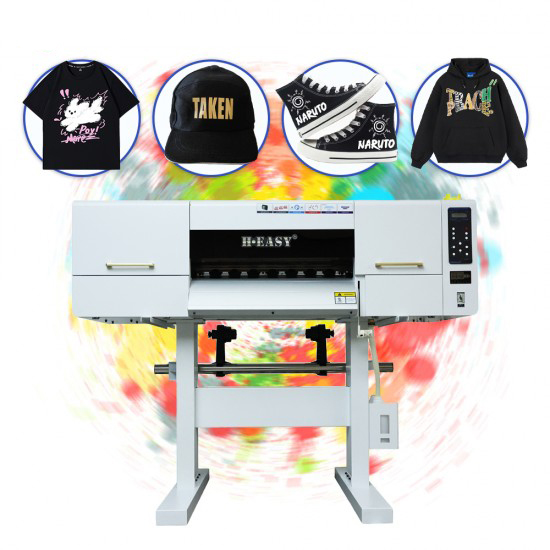
A 30 cm desktop DTF printer like the HY-401 handles sampling and short-run dark-fabric work. For daily production, step up to the HY-702 60cm production DTF - dual industrial heads and an inline shaker keep dark-fabric throughput predictable, where white-ink-heavy work otherwise hits desktop-machine bottlenecks fast.
Conclusion
DTF excels on dark fabric because the white underbase is built into the process from the start, not bolted on as a pretreatment step. The result is bright, vivid prints on any dark substrate with the same workflow used for light fabric - and without the chemistry, drying time and waste overhead of DTG pretreatment.
Printers matched to this guide