How Much Pigment Ink Is Used per Square Meter of Fabric?
Pigment ink consumption on digital textile printers runs around 20 g per square meter of fabric as a practical reference number for cost estimating. At a $15/kg ink price, that translates to about $0.30/m² in ink cost. Real consumption swings with coverage, color depth and fabric absorbency.
The reference number
20 g/m² is widely used as the planning baseline for pigment textile printing because it averages out across:
- Mixed color and white-space coverage typical of real production patterns
- Standard 2–4 pass printing on industrial Ricoh Gen6-class heads
- Reasonable pretreatment quality (color stays surface-bound)
For higher-accuracy budgeting, increase the number for full-coverage dark artwork (up to 30–40 g/m²) and decrease it for light-coverage designs (below 15 g/m²).
What drives consumption variance
- Design coverage - full-bleed patterns use far more ink than small-graphic prints on a mostly-blank substrate.
- Color depth - dark colors (navy, red, full black) and high-saturation areas need increased ink output to read properly.
- Fabric type - natural fibres absorb more ink than synthetics; cotton and linen consume more than polyester at the same visible result.
- Pretreatment - proper sizing keeps pigment on the surface where it’s visible; under-treated fabric wicks ink into the fibre matrix, wasting it.
- Print mode - higher-quality modes (more passes) lay thicker ink and consume more per m².
- Fastness target - durability-critical prints sometimes use heavier ink coverage for stronger bond after heat-fixation.
Cost formula
For a quick ink-only estimate:
ink cost per m² = 0.02 kg × ink price per kgAt $15/kg ink, that’s $0.30/m². At $20/kg premium ink, it’s $0.40/m².
All-in cost is larger
Ink is one cost line. A realistic per-m² total for pigment printing includes:
| Cost line | Per m² |
|---|---|
| Ink | ~$0.30 |
| Pretreatment | ~$0.10 |
| Drying / fixation | ~$0.05 |
| Labor / machine | ~$0.08 |
| Maintenance / waste | ~$0.05 |
| Total | ~$0.58 |
See how much does pigment ink printing cost per square meter for the full breakdown.
Fabric compatibility
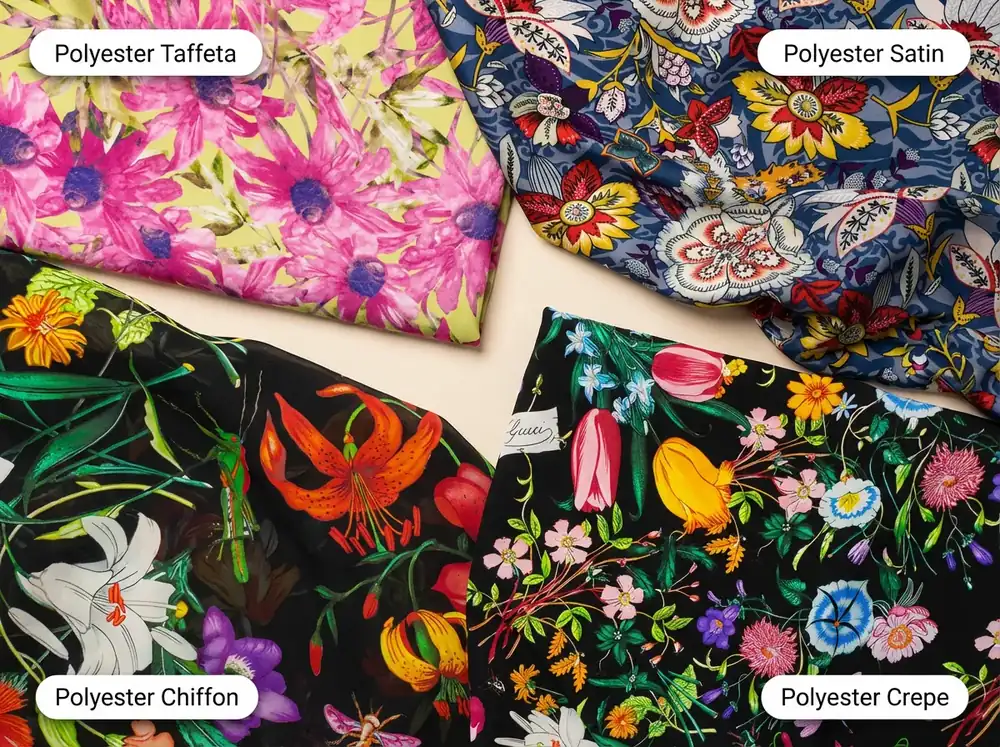
Pigment ink works on cotton, silk, polyester, nylon, rayon, blended fabrics, wool and linen - but consumption varies. Always sample on representative fabric before pricing a production order; the 20 g/m² baseline is a planning number, not a contractual quote.
Production-grade hardware
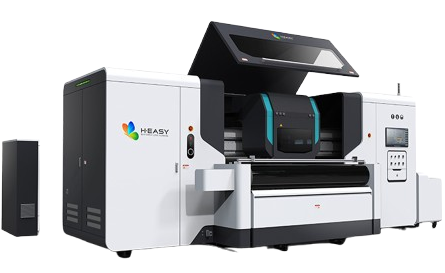
For industrial-scale pigment textile printing, see the H-Series R2R printers - 1.8–2.6 m direct-to-fabric Ricoh Gen6 platforms supporting reactive, disperse, acid and pigment ink workflows.