How No-Wash Pigment Printing Reduces Production Cost
Pigment printing skips the steaming, washing and drying steps that reactive ink workflows require. The shorter workflow cuts water, energy, labor, equipment use and defect rates - and the total savings typically outweigh any ink-cost difference between pigment and reactive inks.
Where the savings come from
Water consumption
Reactive printing’s washing step removes unfixed dye and process chemicals from the fabric. The wash uses large volumes of fresh water and generates large volumes of dye-laden wastewater. Pigment printing only uses water in the pretreatment solution - orders of magnitude less per m² of fabric.
Wastewater treatment cost
Less wash → less wastewater → less treatment cost. Wastewater treatment involves chemical handling, electricity, equipment investment and regulatory compliance. Reducing wastewater volume reduces all four.
Workflow shortening
Traditional reactive workflow:
Sizing → Printing → Steaming → Washing → Drying → FinishingPigment workflow:
Sizing → Printing → Drying → FixationThree steps eliminated. Each step removed means less floor space, less equipment, less operator time and lower defect-introduction risk.
Labor and equipment
A traditional reactive mill operates:
- Wash lines (multi-stage rinsing, often 4–6 tanks)
- Steam fixation chambers
- Auxiliary drying after wash
Each is a capital expense and operating cost line. Pigment mills can be configured without any of these - running printer + heat-fix dryer as the complete production line.
Defect rate
Each post-print processing step is an opportunity for fabric damage:
- Color bleeding during wash if fixation wasn’t complete
- Fabric deformation under tension in long wet-processing lines
- Handling damage in transfer between stages
Removing wash and steam eliminates these defect modes entirely.
The cost comparison
Pigment ink is usually slightly more expensive per kg than reactive, but the per-m² total cost lands lower on pigment in most setups because:
| Cost factor | Reactive | Pigment |
|---|---|---|
| Ink | $ | $$ |
| Water + treatment | $$ | minimal |
| Energy (steam + wash heat) | $$ | $ |
| Labor (multi-stage line) | $$ | $ |
| Equipment depreciation | $$ | $ |
| Defect / scrap | $$ | $ |
Total per-m² cost for pigment lands at around $0.58/m² in a typical factory setup - see how much does pigment ink printing cost per square meter.
Where reactive still wins
Pigment isn’t a universal replacement:
- Premium cotton fashion - reactive holds deeper saturation and a softer hand after wash than pigment
- Brands with established reactive supply chains - switching costs may dominate
- Customer-specified reactive contracts - many brand specs still call for reactive explicitly
Production hardware
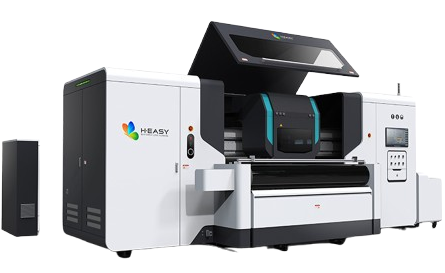
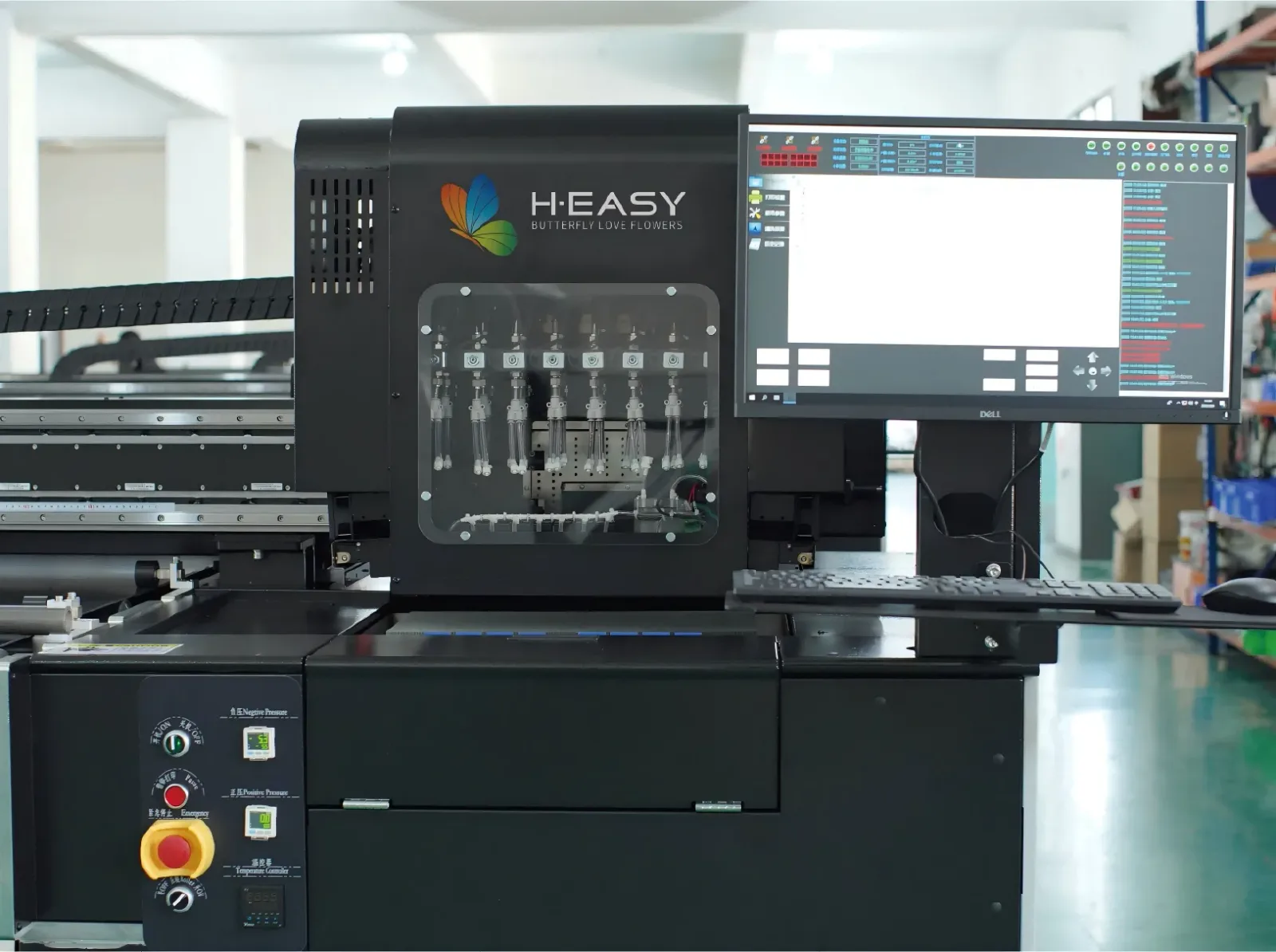
For pigment textile printing at industrial scale, see the H-Series R2R printers - 1.8–2.6 m platforms supporting pigment, reactive, disperse and acid ink workflows. A factory can run all four ink systems on the same machine class, switching ink lines per job rather than per ink chemistry.
Conclusion
The “ink price” headline number rarely captures the real cost of textile printing. Process simplification - fewer steps, less water, less equipment, less labor - is usually the larger lever. Pigment ink wins that comparison in most modern factory setups, which is why no-wash pigment printing is the fastest-growing segment of digital textile production.