Why Pigment Ink Printing Works Well for Blended Fabrics
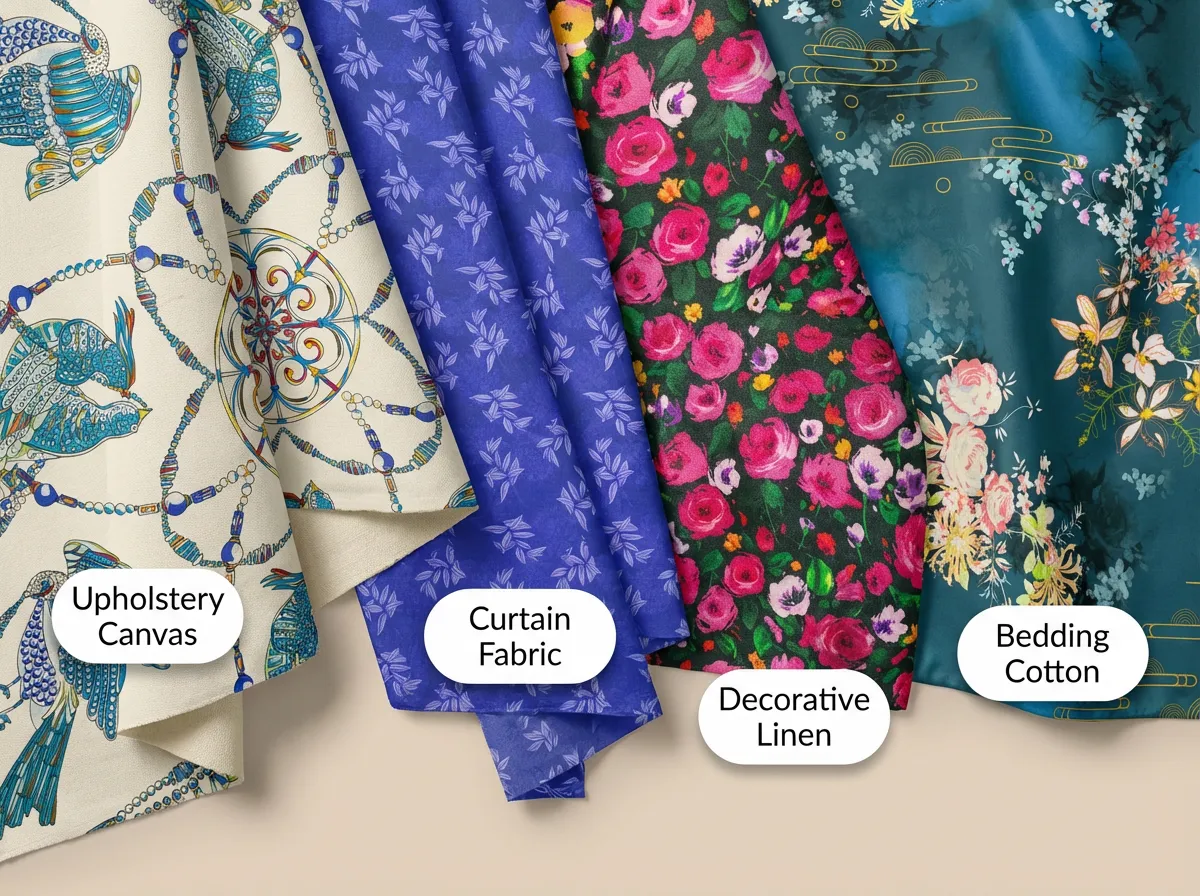
Pigment ink works on blended fabrics because it bonds to the fabric surface via a binder system, not through fibre-specific chemistry. Reactive ink targets cellulose (cotton); disperse targets polyester; acid targets nylon and wool. Pigment ink doesn’t care - the same ink and process work on any of them, including arbitrary blends.
How pigment ink bonds
Pigment ink contains:
- Color particles (pigment) - the visible color
- Binder - a polymer that holds pigment to the fabric surface
- Carrier (water) - delivers the ink through the printhead
After printing, heat fixation activates the binder. The binder forms a thin film that bonds pigment to the fabric surface - covalently to itself and mechanically to fibre asperities. The bond is on the surface; the chemistry of the underlying fibre doesn’t enter the reaction.
By contrast, reactive ink uses dye that forms a covalent bond directly with cellulose hydroxyl groups (cotton). Disperse ink uses dye that sublimates into polyester at high temperature. Acid ink uses dye that bonds ionically with protein fibres (nylon, wool, silk). Each is fibre-specific.
Why this matters on blended fabrics
A 50/50 cotton-polyester blend has:
- 50% cellulose (cotton) - where reactive bonds
- 50% polyester - where disperse bonds
- Neither perfectly suited to either ink chemistry
Run reactive on this blend and color washes out from the polyester side. Run disperse and color washes out from the cotton side. Run pigment and the binder bonds to both fibre types’ surface with equal performance.
Blends pigment ink handles well
- Cotton-polyester - most common apparel and home-textile blend
- Polyester-viscose - drape and softness for fashion fabric
- Cotton-linen - traditional blend for shirts and shirting
- Cotton-nylon - workwear, athletic apparel
- Knitted blends - T-shirt jersey, polo piqué, fleece
- Wool blends - fashion / suiting fabric
Without pigment ink, factories serving multi-blend product lines need to swap ink chemistry per fabric - multiple ink stocks, multiple cleaning cycles, multiple SOPs. Pigment ink removes that complexity.
When NOT to use pigment ink
- Pure silk for premium fashion - acid ink delivers a softer hand and brighter color
- Pure polyester sportswear at high volume - disperse (sublimation) is structurally superior on long-run polyester
- Pure cotton for premium dyed look - reactive ink hits deeper saturation with no surface coating
Pigment ink is the right answer when fabric mix is the constraint - not when one fibre dominates and you can optimize for it.
Production setup
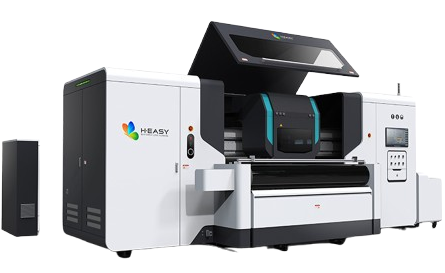
For pigment printing on blended fabrics at scale, see the H-Series R2R printers - 1.8–2.6 m Ricoh Gen6 platforms supporting reactive, disperse, acid and pigment workflows on the same machine class. The H-2632 wide R2R handles home-textile production where blend variety is highest.
Process
Standard pigment workflow on a blended fabric:
- Pretreat the fabric with a 5%-ish modifying liquid (per supplier TDS)
- Print at 20–30 °C, 50–65% RH ambient
- Dry at ≈140 °C for ~5 minutes
- Heat-fix at 130–150 °C for 4–6 minutes (binder activation)
- Optionally soften with a finish treatment
No washing step is needed - see how no-wash pigment printing reduces production cost.
For process control, read why fabric pretreatment matters in pigment printing. For market context, see why pigment ink printing is making a comeback.