R2R Ink Workflows: Reactive, Pigment & Disperse Printing
Reactive ink prints cotton, linen and viscose via a covalent cellulose bond. Pigment ink works on any fibre via a surface binder system. High-temperature disperse ink sublimates into polyester fibres. Each fits a different fabric range, post-print process and washfastness target - choose by fabric type and finishing capability, not by ink price alone.
Reactive printing - for cellulose fibres
Reactive dye forms a covalent bond with the hydroxyl groups in cellulose fibres. The bond is permanent at the molecular level - the dye becomes part of the fibre.
Best for: cotton, linen, viscose, rayon and cellulose-dominant blends. Premium cotton fashion, silk fabric with reactive-compatible chemistry, and high-saturation prints where color depth matters.
Process steps
- Pretreatment / sizing of the fabric
- Printing the artwork on the R2R printer
- Steaming at 102–103 °C for 10–15 minutes to fix the dye
- Washing to remove unfixed dye and chemicals
- Drying
- Finishing
Strengths
- Grade 4–5 wash fastness typical (industry rating)
- Deepest color saturation
- Softest hand - no surface coating; dye is the fibre
Trade-offs
- Full wet-processing line required (steam + multi-stage wash + dry)
- High water and energy consumption
- Wastewater treatment cost is significant
Pigment printing - surface-bonded, all fibres
Pigment ink contains pigment particles + a binder system + a water carrier. After printing, heat fixation activates the binder, which forms a thin film bonding pigment to the fabric surface - not into the fibre. The chemistry doesn’t depend on fibre type.
Best for: cotton-polyester and other blends, mixed-fabric daily output, no-wash production, environmental-compliance-driven mills, fast-fashion and small-batch SKUs.
Process steps
- Pretreatment (typical ≈5% modifying solution)
- Printing
- Drying (e.g. ≈140 °C for ~5 min)
- Heat-fixation at 130–150 °C for 4–6 minutes - activates the binder
- Optional softening
No washing step is required.
Strengths
- Works on any fibre - cotton, polyester, blends, silk, wool, nylon
- No wash step → vastly less water, energy, labor, defect risk
- Modern chemistry hits commercial-grade washfastness on most fabrics
- One ink, one workflow, multiple fabric types
Trade-offs
- Slight hand stiffness from binder film (less than older formulations, but more than reactive)
- Premium cotton fashion still slightly prefers reactive for the deepest color depth and softest finish
See pigment vs reactive - which is the future for the structural comparison and why pigment ink works on blended fabrics for the mechanism.
High-temperature disperse printing - for polyester
Disperse dye sublimates from solid to gas under heat and bonds molecularly inside polyester fibres (or polymer-coated rigid substrates). The dye becomes part of the polymer.
Best for: polyester sportswear and swimwear, soft signage (polyester banners), home textile on polyester, polymer-coated rigid substrates.
Process steps
- Pretreatment of the polyester fabric
- Printing
- Fixation - either:
- Baking at ≥170 °C, or
- Steam fixation at around 130 °C
- Optional washing depending on application
Strengths
- Most permanent result of the three - dye is the fibre
- No-feel hand on polyester
- Excellent lightfastness and abrasion resistance
Trade-offs
- Polyester-only (or coated substrates). Washes out of cotton.
- High curing temperatures require capable fixation equipment
Side-by-side comparison
| Reactive | Pigment | Disperse | |
|---|---|---|---|
| Bond mechanism | Covalent (cellulose) | Surface binder | Molecular (polyester sublimation) |
| Best fabric | Cotton, linen, viscose | Blends, mixed fabric | Polyester |
| Wash fastness | Grade 4–5 | Commercial grade (formulation-dependent) | Excellent (dye is fibre) |
| Hand feel | Softest | Slight stiffness | No-feel |
| Wash step required | Yes | No | Optional / variable |
| Fixation temp / time | 102–103 °C / 10–15 min steam | 130–150 °C / 4–6 min heat | ≥170 °C bake or 130 °C steam |
| Water consumption | High | Minimal | Low to moderate |
| Best for | Premium cotton fashion | Mixed-fabric, no-wash, compliance | Polyester sportswear, home textile |
R2R machines that support all three workflows
Industrial roll-to-roll textile printers can be configured to run any of these ink chemistries - reactive, pigment, disperse, and acid (for silk/wool/nylon). The hardware accommodates the ink; the workflow differs in pre- and post-processing.
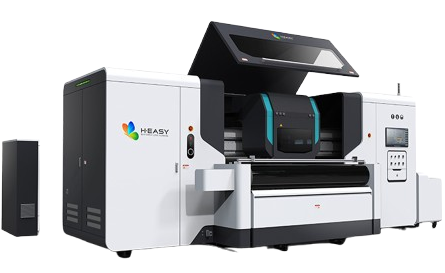
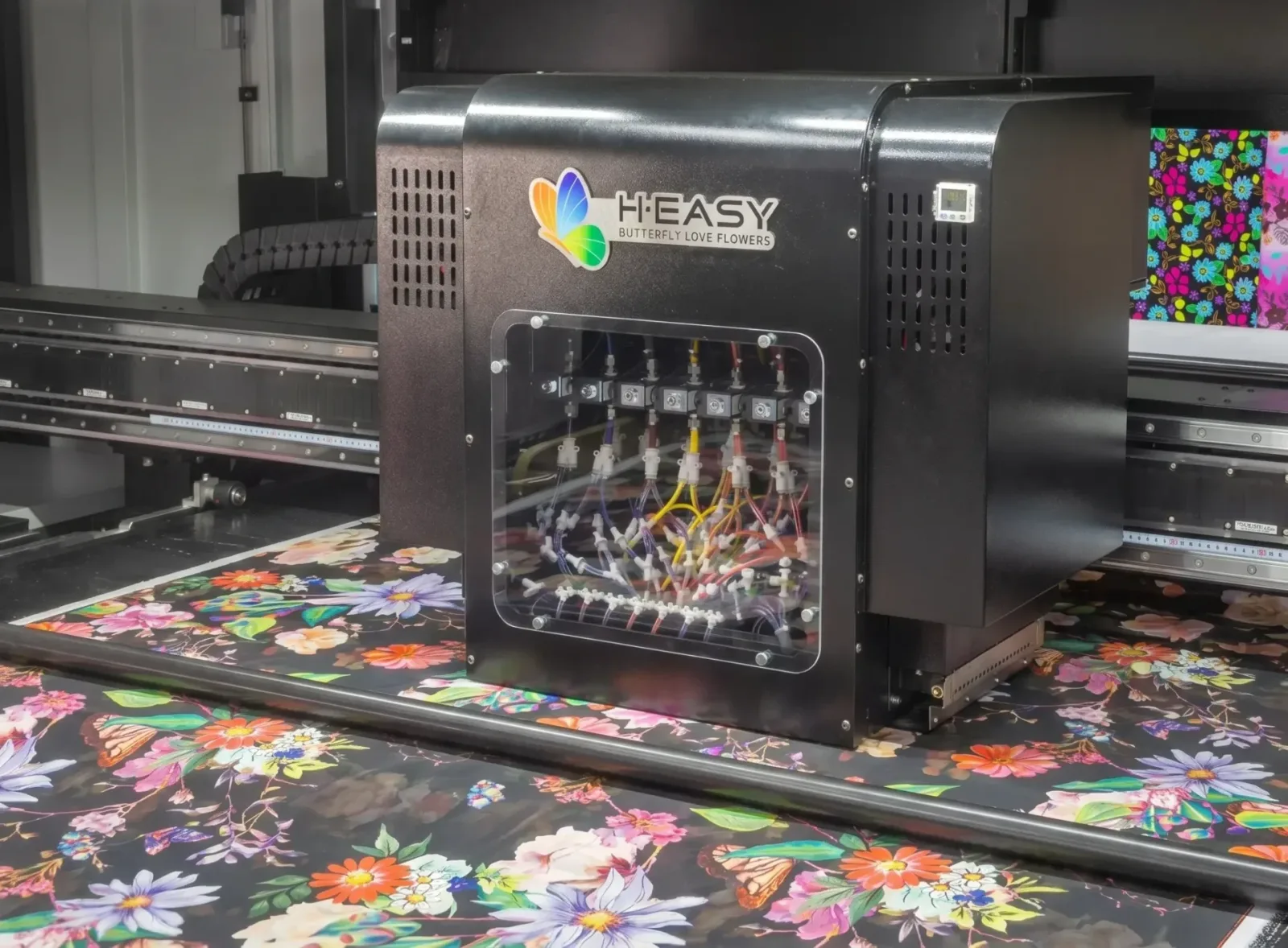
Factories serving multiple fabric categories often dedicate one machine per ink chemistry to avoid cross-contamination during the cleaning cycle between ink swaps. The H-Series R2R printers cover all four ink systems on the same machine class - 1.8–2.6 m widths with 8 to 32 Ricoh Gen6 industrial heads. The current published reference maximum remains 650 m²/h at 2-pass; qualify comparable output against the model, fabric, ink, coverage, feathering and sellable-quality standard.
When to choose which
- Premium cotton apparel → reactive
- Polyester sportswear, swimwear, home textile → disperse
- Blends, mixed-fabric production, no-wash workflows → pigment
- Environmental-compliance-driven operations → pigment
- Multi-product mills serving all fabric types → all three on dedicated machines
For matching specific fabrics to specific printing processes, see how to choose the right fabric printing process for your textile material.